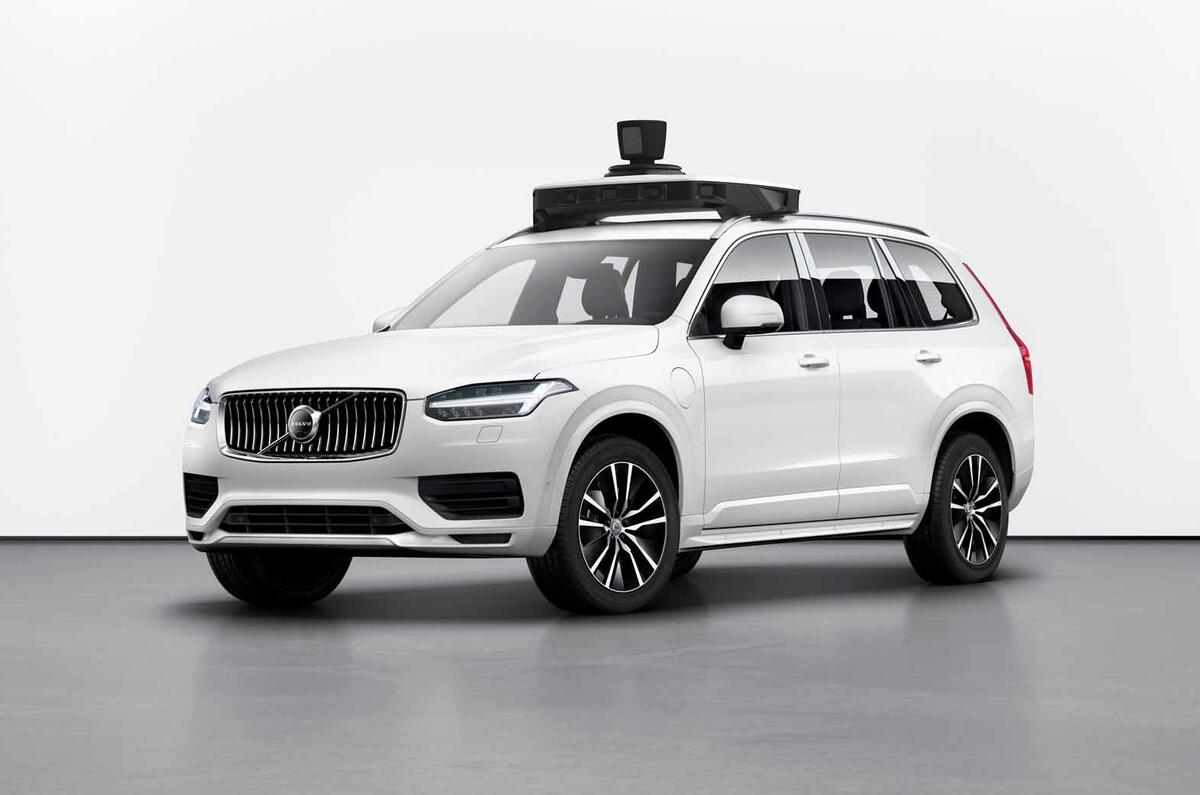
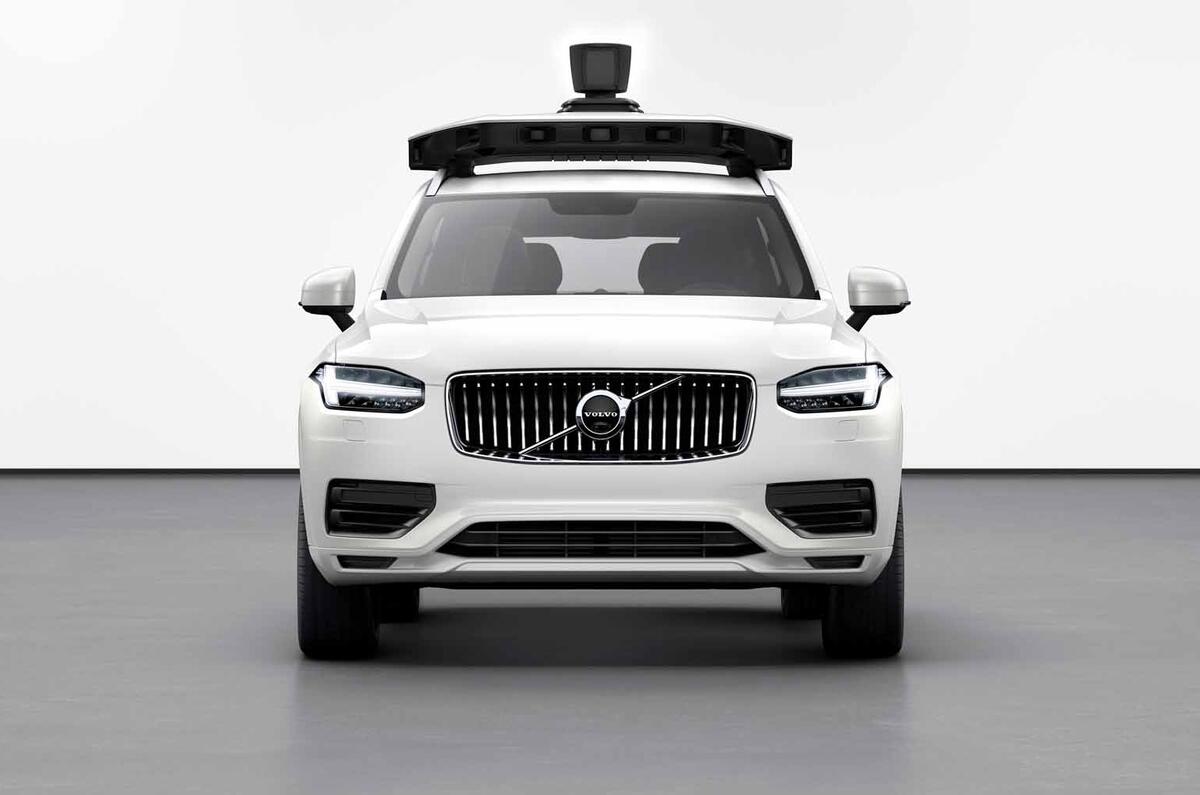
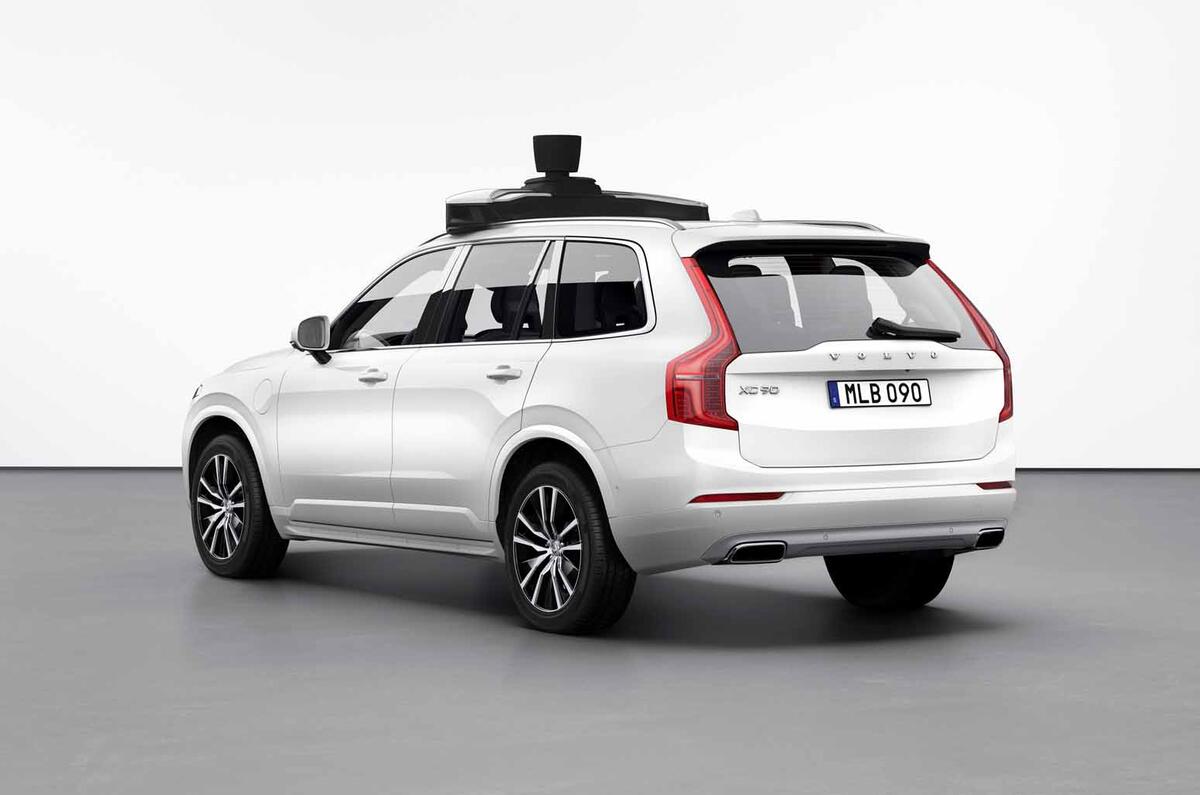
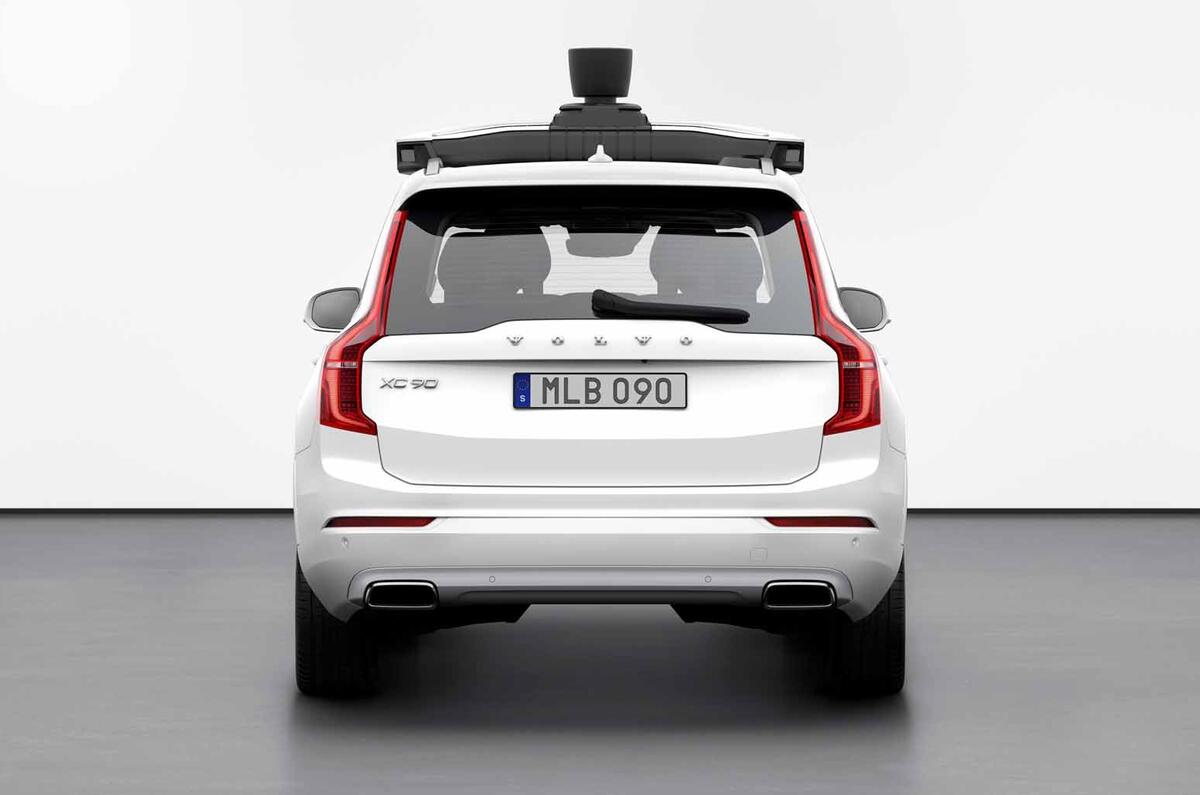
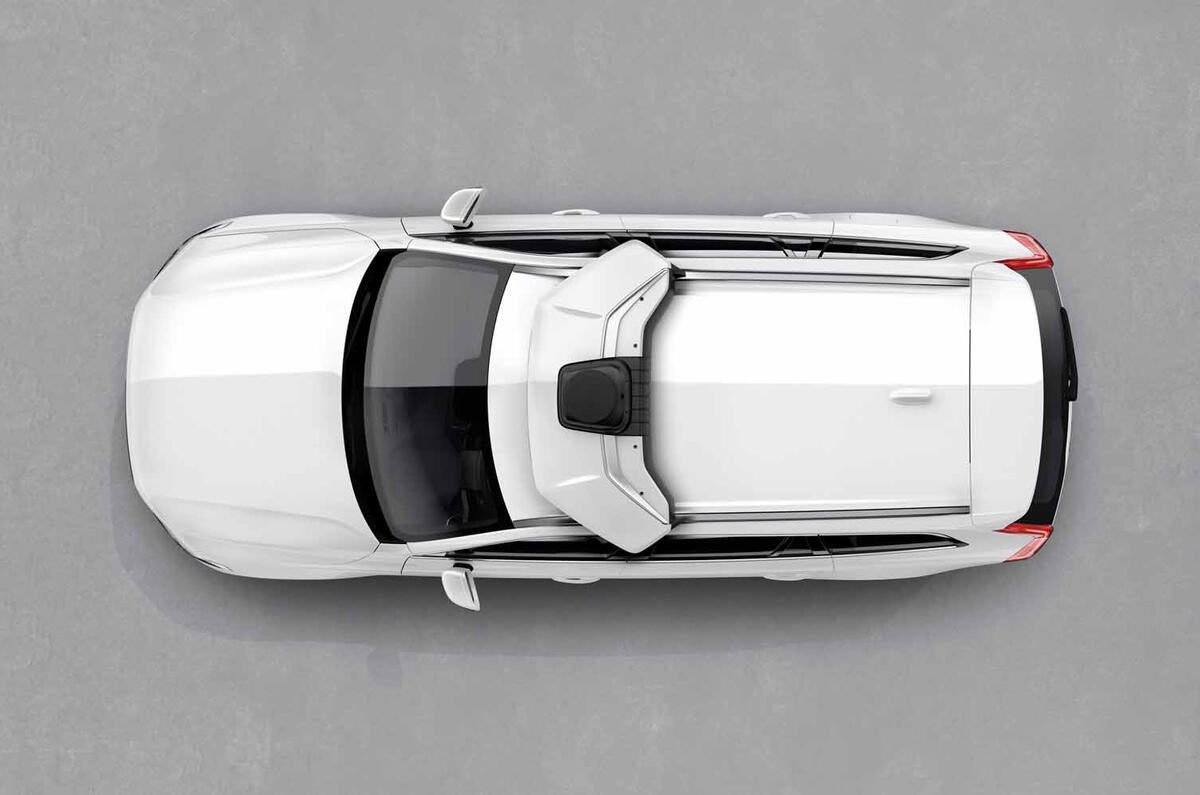
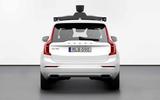
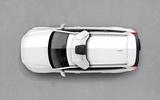
Volvo has presented the fruits of its ongoing collaboration with ride-hailing firm Uber: a production-ready Volvo XC90 capable of self-driving.
Fitted with “an array of sensors” (not detailed in depth by Volvo) mounted on a bar that can attach to its existing roof rails, the SUV also includes several back-up systems for steering and braking, alongside a back-up battery. The back-up is designed to kick in immediately should any of the primary systems fail.
The XC90 doesn’t feature autonomous software developed by Volvo; instead, it’s been designed to allow Uber to “easily install its own self-driving system, enabling the possible future deployment of self-driving cars in Uber’s network as an autonomous ride-sharing service”.
Uber claims this new XC90 is safer and more reliable than its current fleet, and will eventually replace these older vehicles. The two companies signed a commercial agreement in 2016 for Volvo to build and deliver “tens of thousands” of autonomous-drive-ready base cars such as these in the next few years.

The Swedish maker claims Uber’s system “may one day” be able to safely and legally operate without a “mission specialist” - Uber’s name for a trained Uber employee currently needed to operate and oversee the firm’s autonomous development cars.
Uber has been trialling a fleet of around 250 autonomous XC90s around various states in the US for two years, with a licence recently granted to conduct testing on public roads in Sweden. One of Uber’s XC90s was involved in a fatal collision between the car and a pedestrian in Arizona last year, which was investigated by the National Transportation Safety Board. The firm shut down the programme after the Arizona governor raised objections.