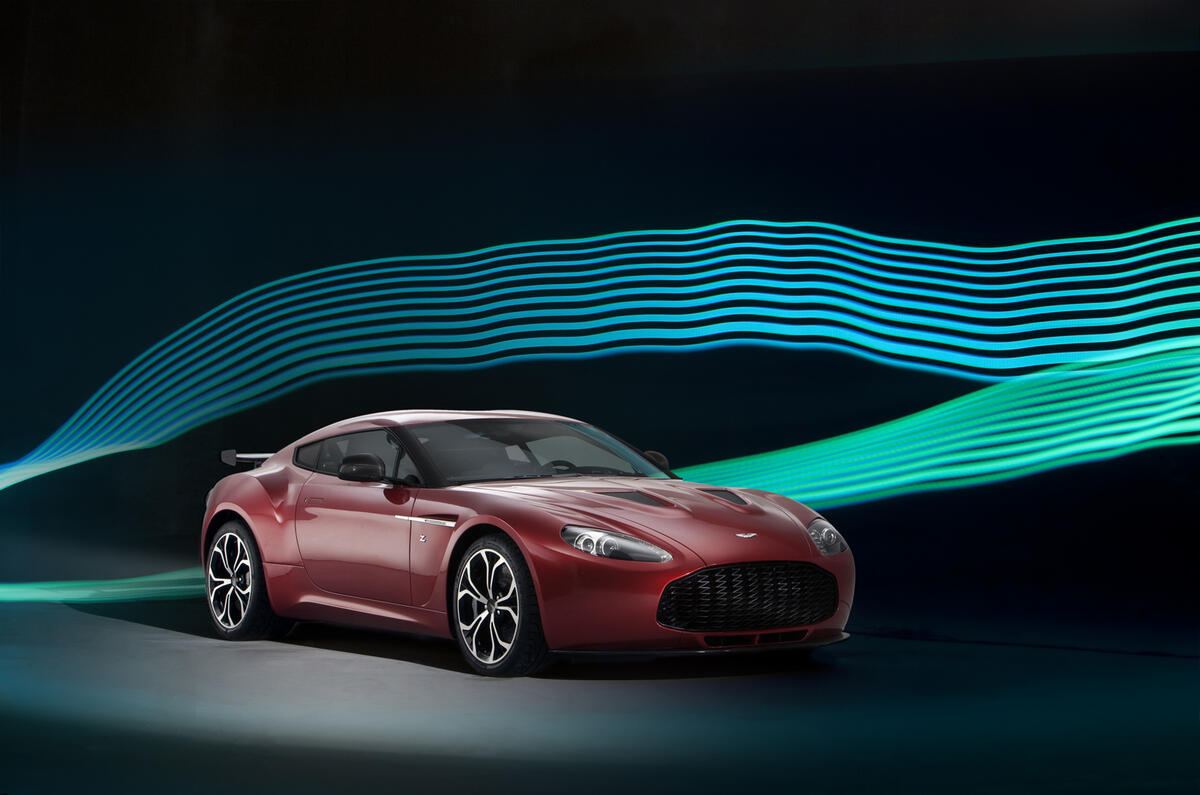
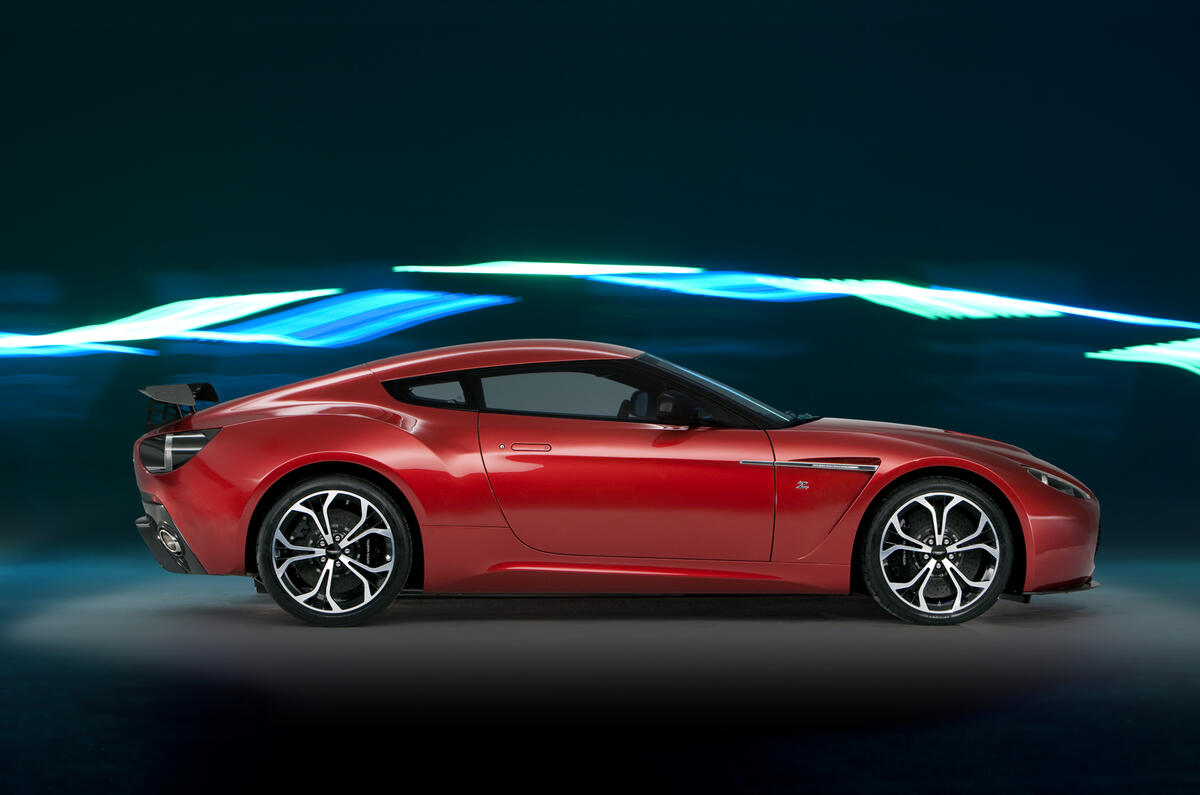
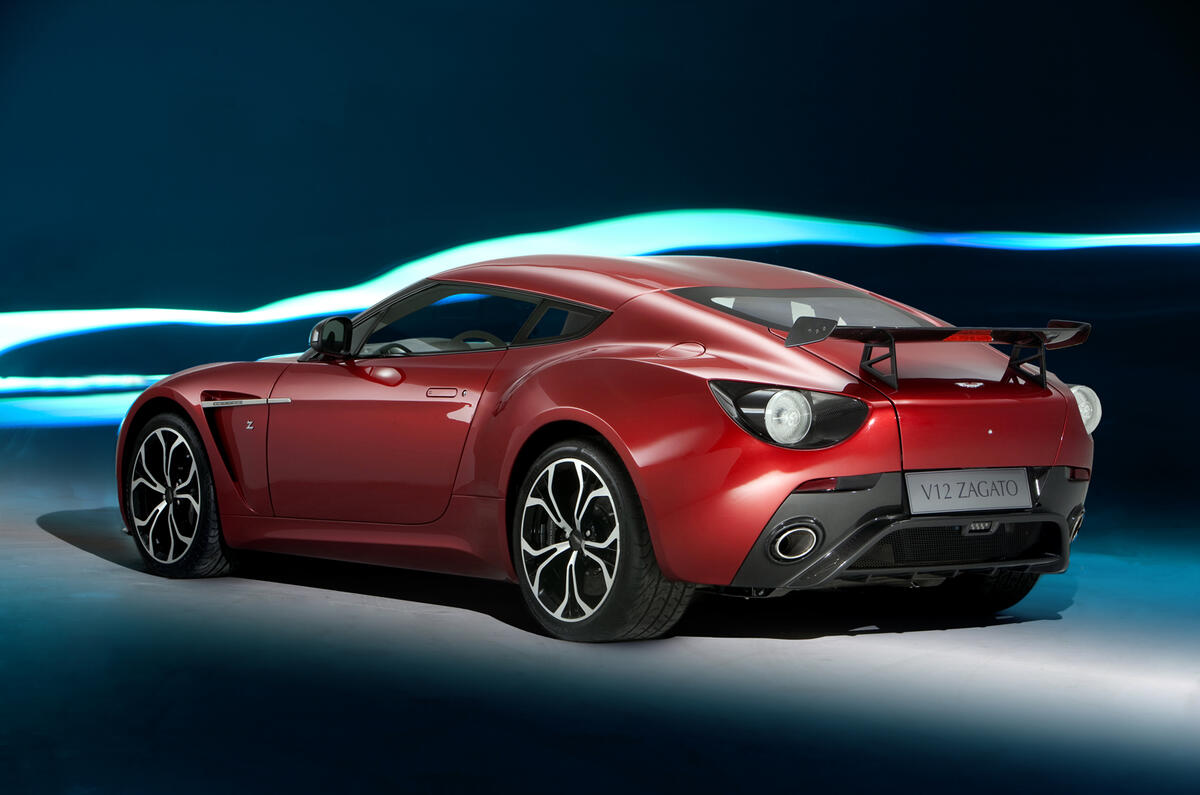
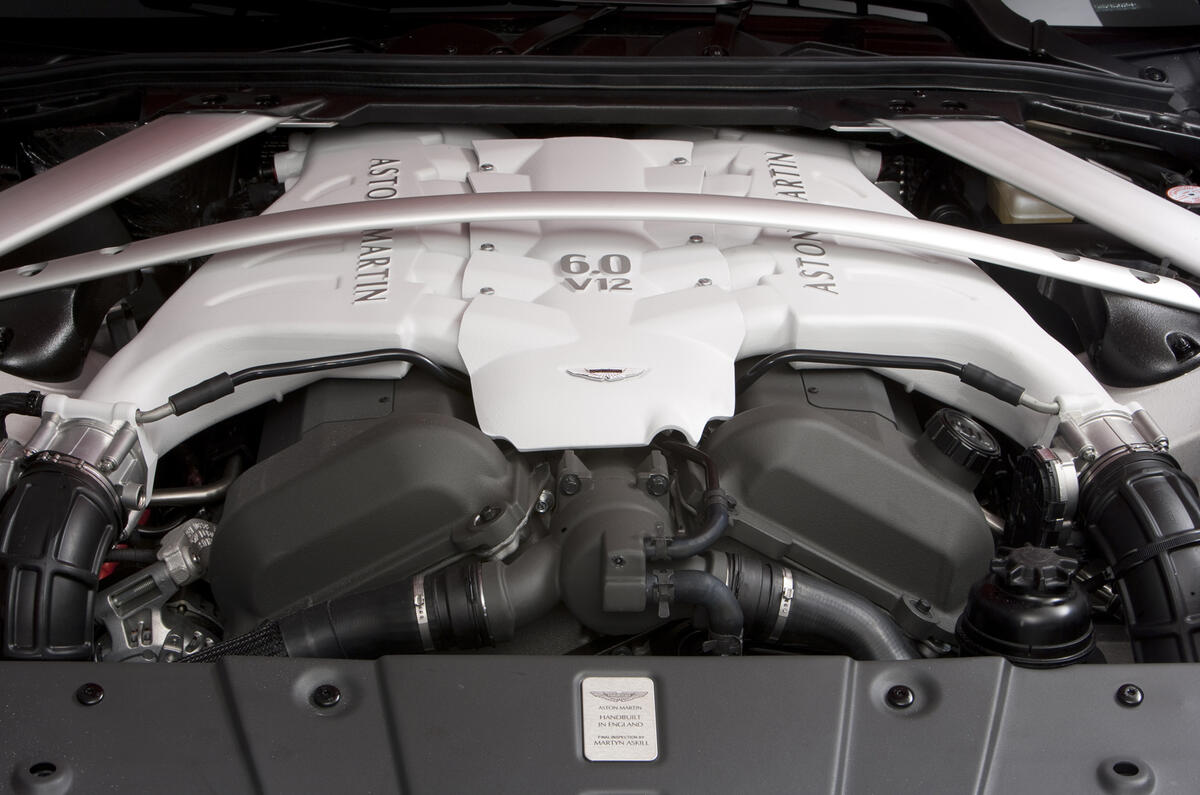
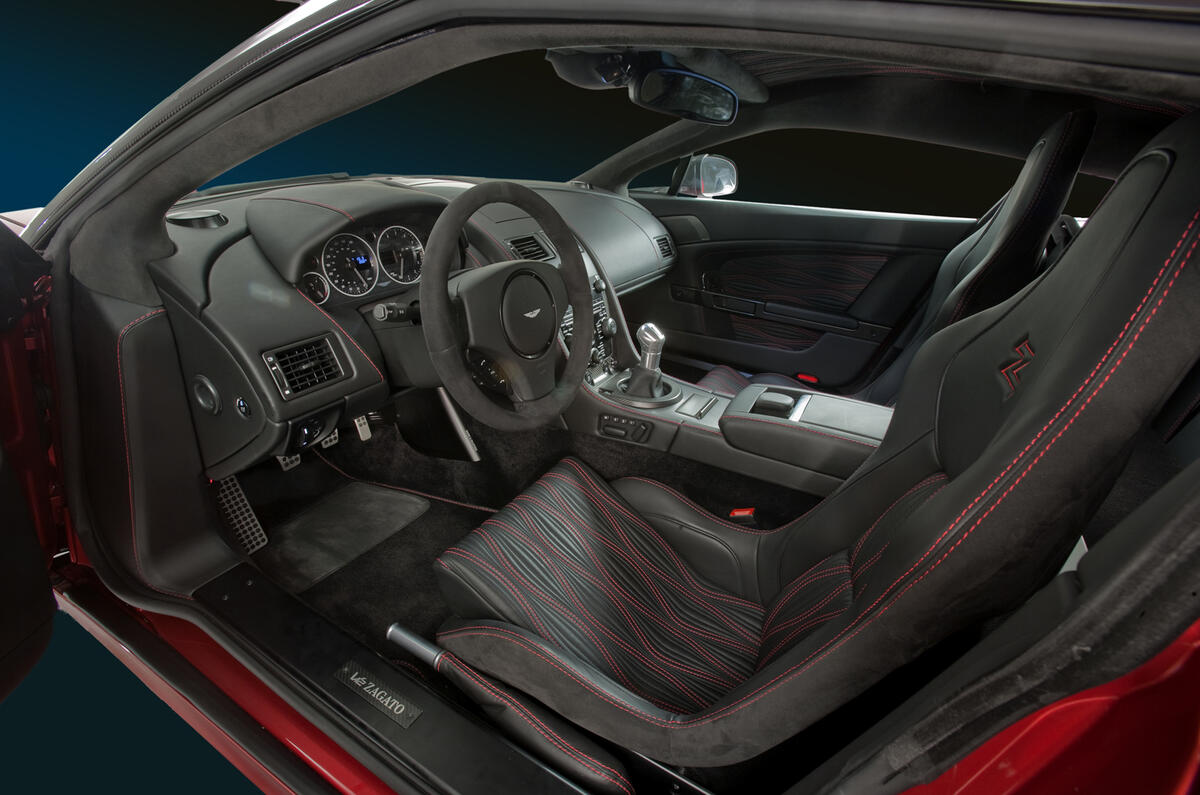
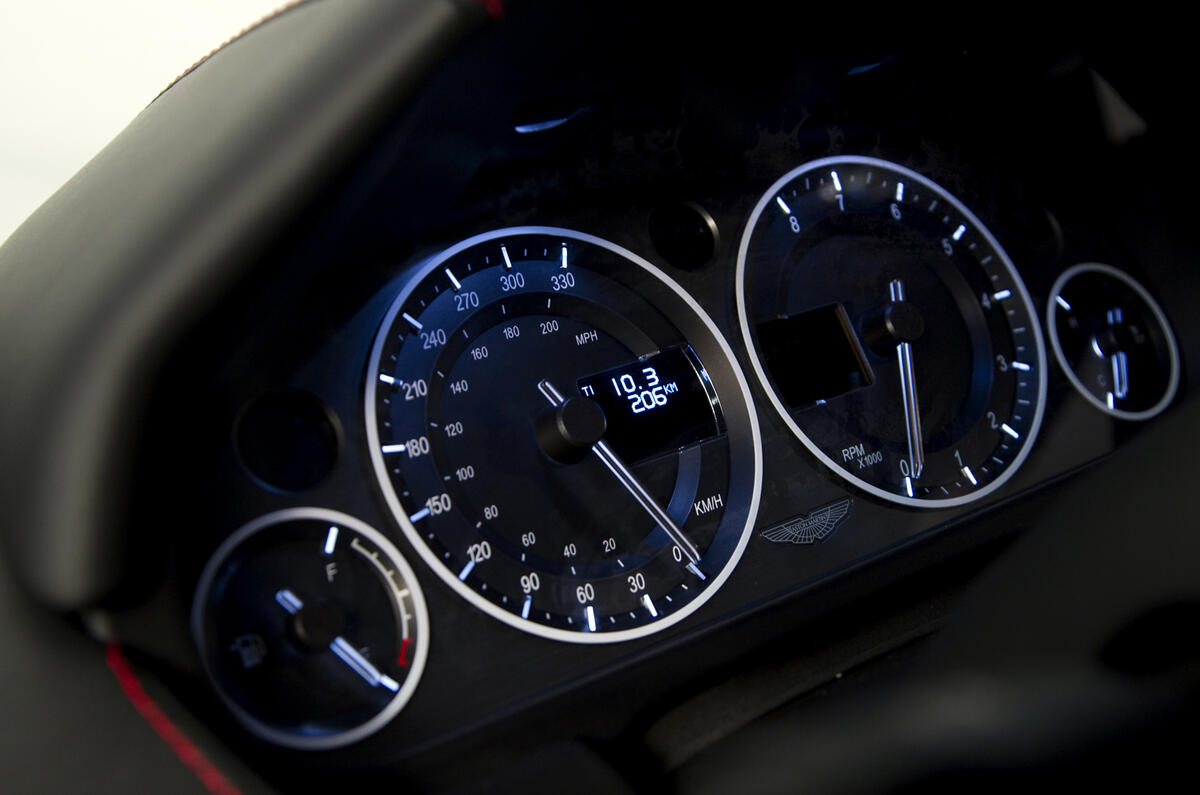
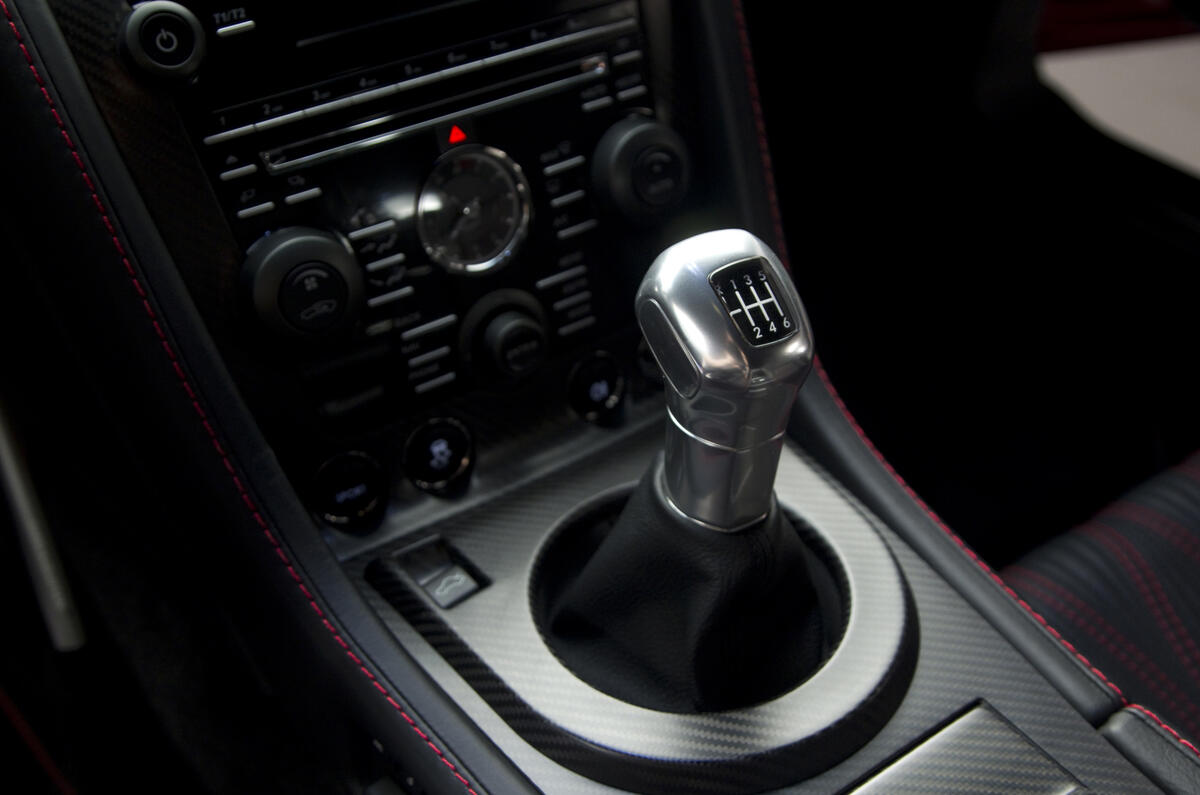
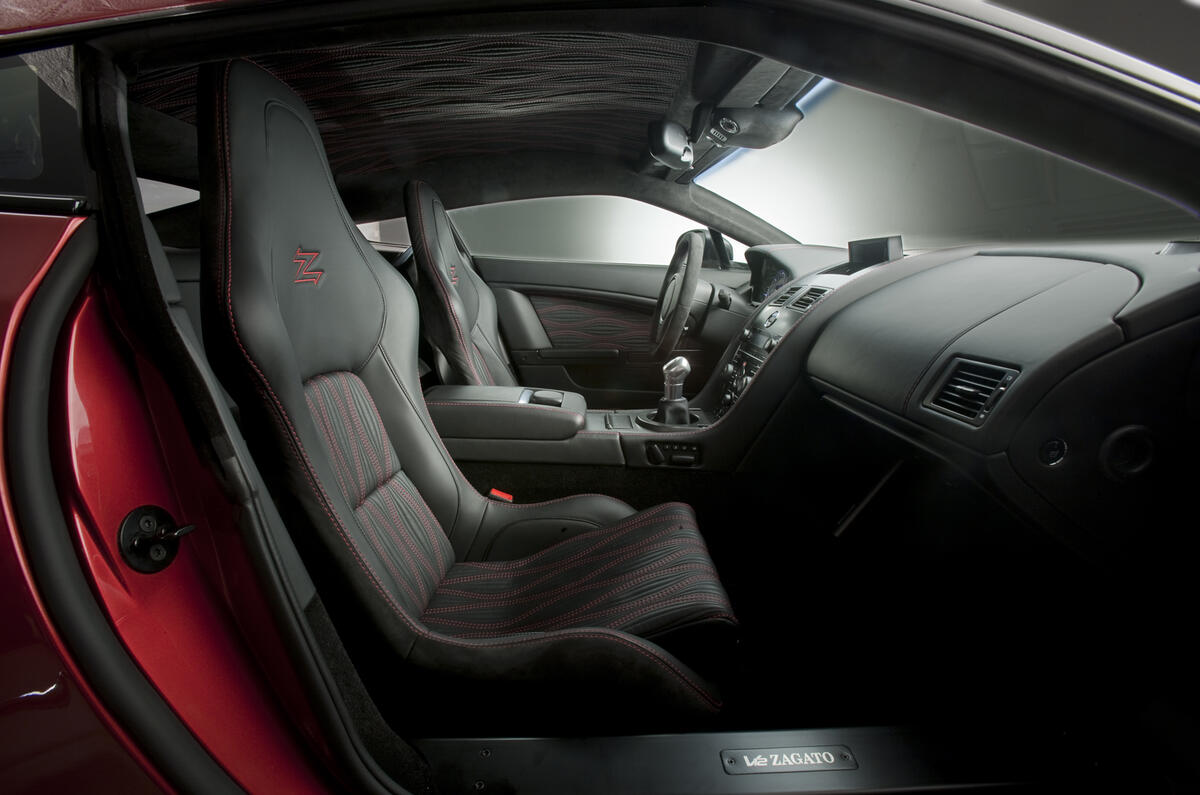









Here, revealed last week and now photographed by Autocar in greater detail, is the production version of Aston Martin’s V12 Vantage Zagato. It celebrates the passing of half a century since Aston Martin first collaborated with the Torinese carrozzeria to create the DB4 GT Zagato. Since that delectable first effort, the collaboration has been reprised just twice: in 1986 with the brutal-looking V8 Zagato, and in 2003 with the DB7 Zagato.
So the new V12 Vantage Zagato is the fourth Aston Martin to wear the Z badge, and its design possesses the full gamut of Zagato’s visual repertoire as evolved over the years on various car makers’ underpinnings, most often Alfa Romeo’s and Lancia’s. There’s the double-bubble roof (designed to reduce frontal area), the reverse-sloped rear edge to the side-window opening, a sensation of sinews trying to burst through the skin and a sometimes unsettling use of slashes, edges and unexpected curves.
Video: See Steve Cropley riding in the Aston Martin One-77
Some Zagato designs have been ruggedly beautiful; some have been aggressively odd. So where did the new V12 Zagato’s looks come from? It is part tribute and part signal to the future. But is it a Zagato design? In spirit and language, yes. In the actual drawing of lines and the creation of shapes, no.
See more Aston Martin Zagato pictures
Today’s Zagato company is headed by Andrea Zagato, grandson of company founder Ugo Zagato, and he has continued the tradition of special-bodied Alfa Romeo projects and industrial design ideas. But the firm is now part of Russian-owned CPP Global Holdings, the kernel of which is Coventry Prototype Panels. This, the original CPP, made (in hand-formed aluminium) the bodies of the two prototype V12 Zagatos that raced in last year’s Nürburgring 24 Hours, and will now make the 150 production cars’ roofs, bonnets, boots and doors partly by machine, partly by hand.
Designed in Gaydon
The design comes not from Turin but from Aston Martin’s studio, next to the Gaydon factory, headed by Marek Reichmann. The project arose from a discussion between Andrea Zagato and Aston’s chief, Dr Ulrich Bez, at the 2010 Geneva show. Each company was to come up with a design to mark the half century, and the two bosses would decide which one to make. Reichmann’s proposal got the nod and the schedule dictated less than two years in which to create the finished car.
Reichmann is well aware of the weight of history and expectation, but a retro-look supercar was never on the agenda. “It had to have simplicity, a pure graphic,” he says, “something to take the product for another 50 years but still be recognisable.”