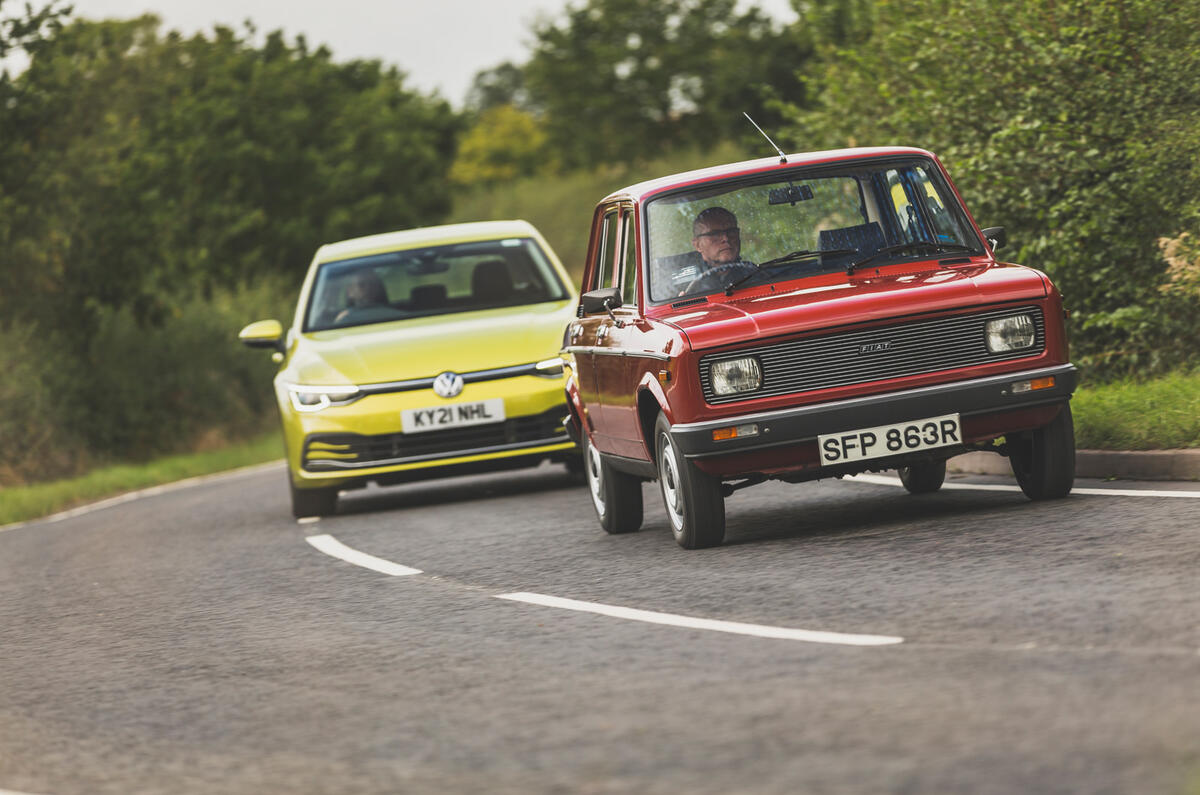
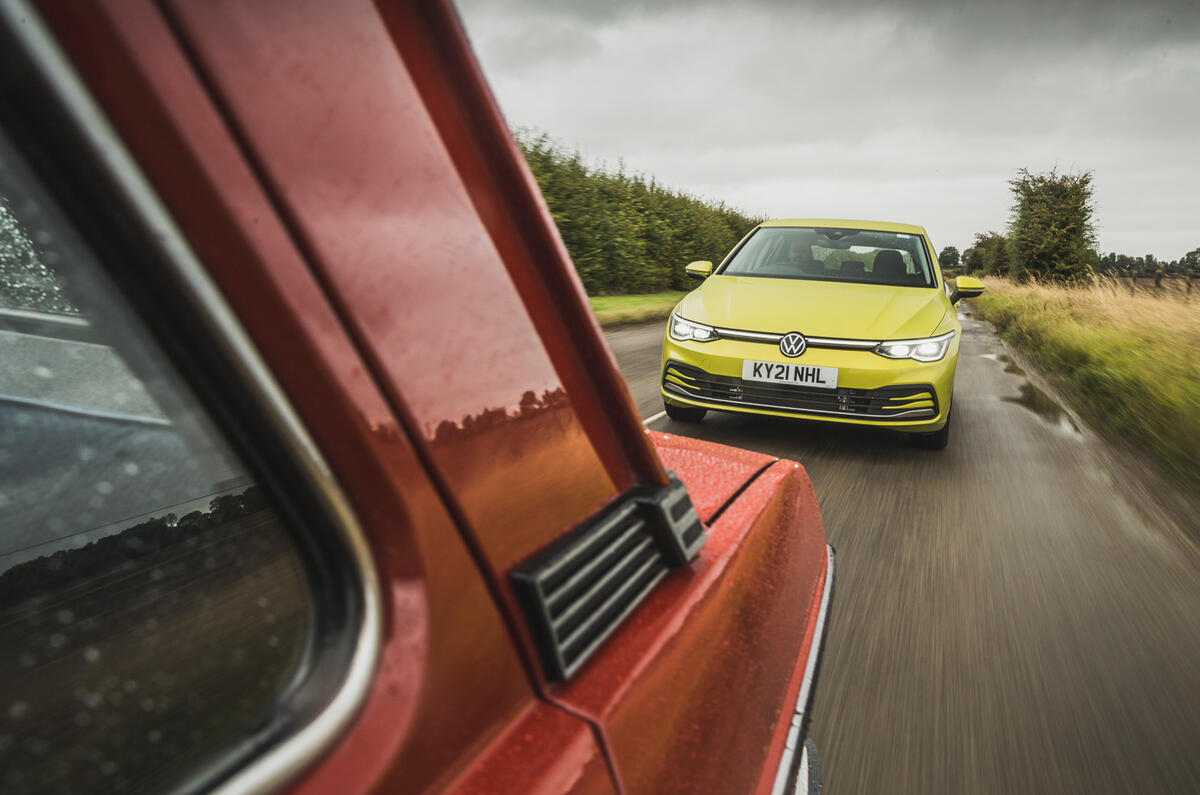
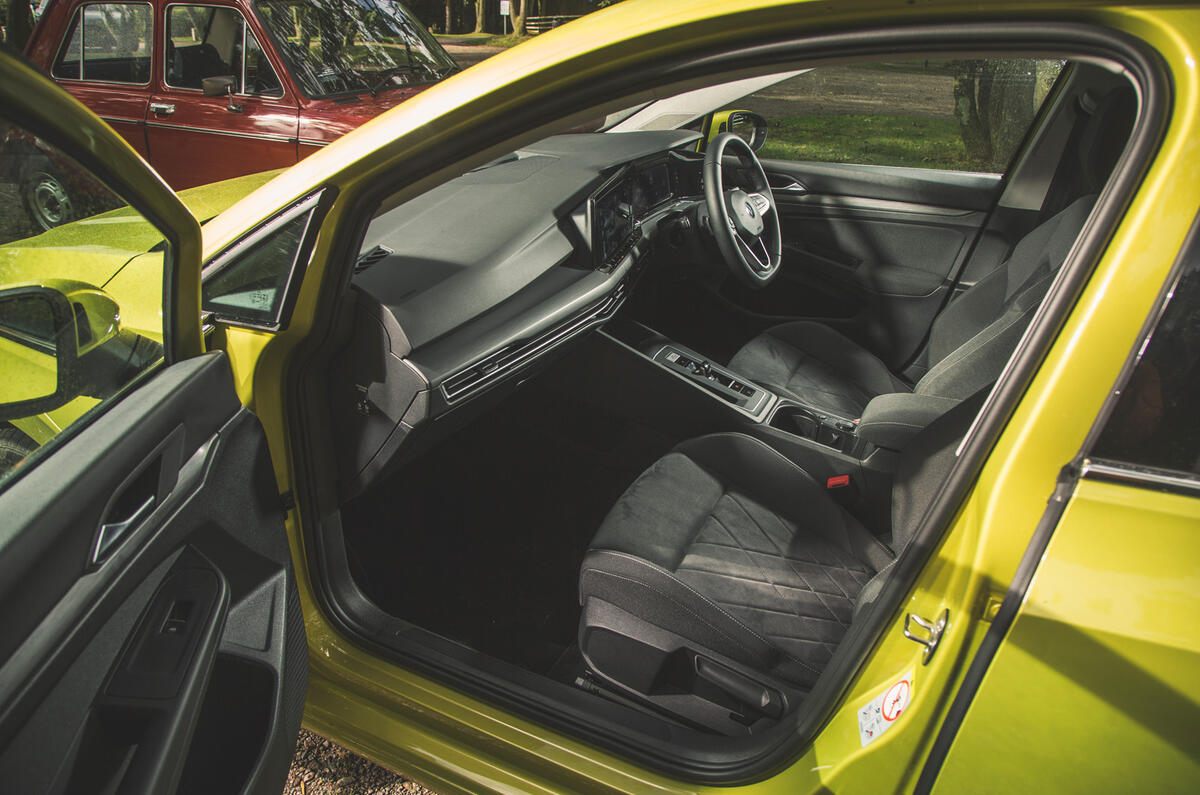
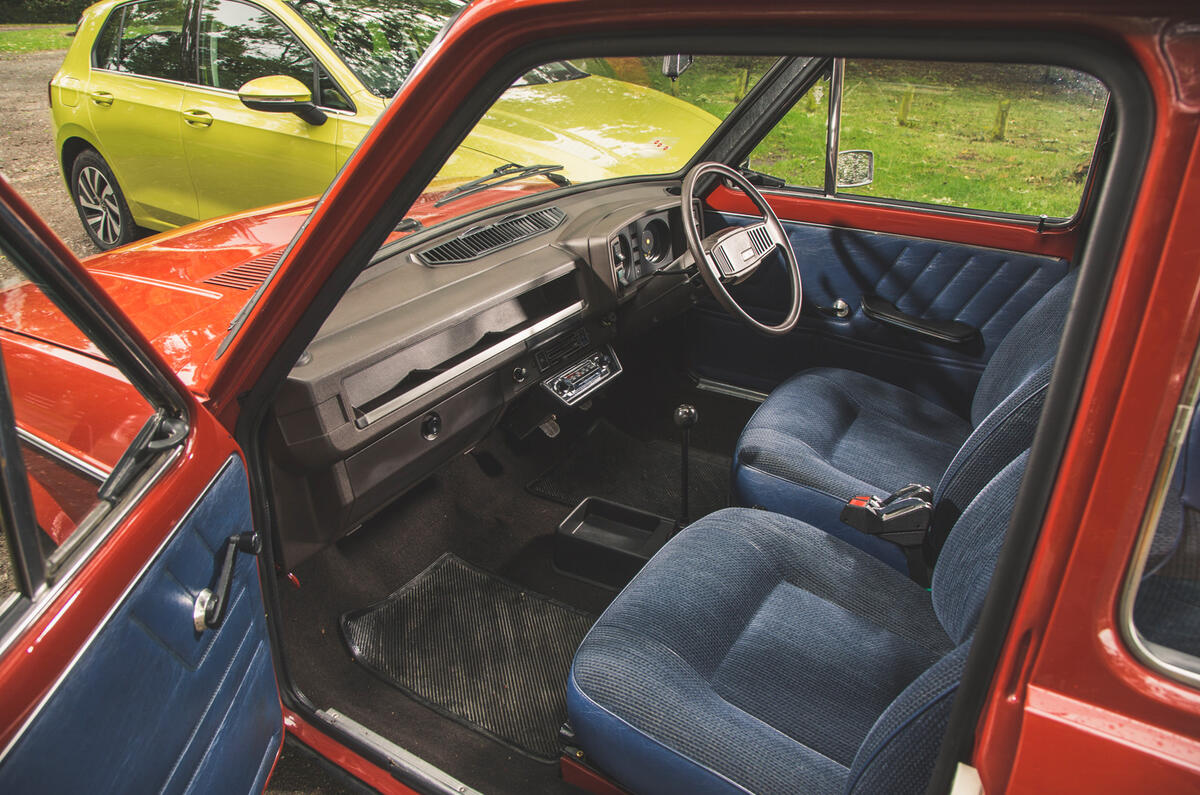
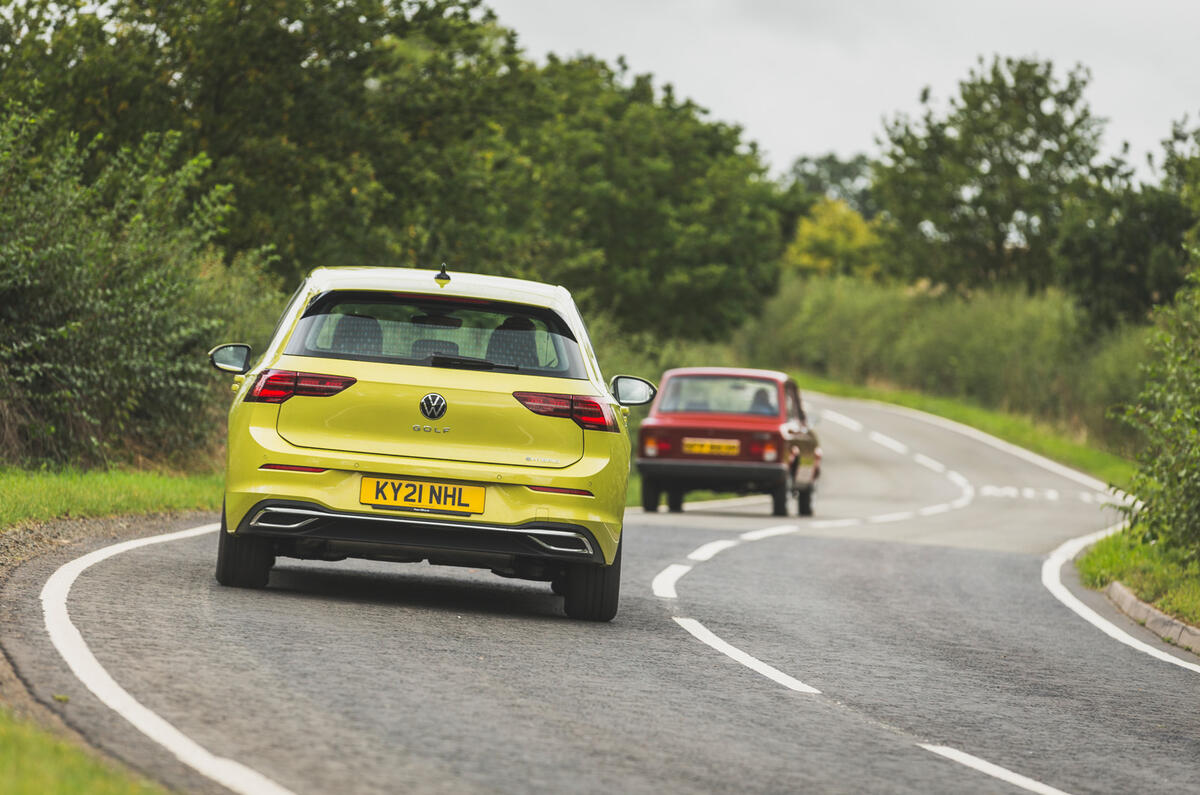
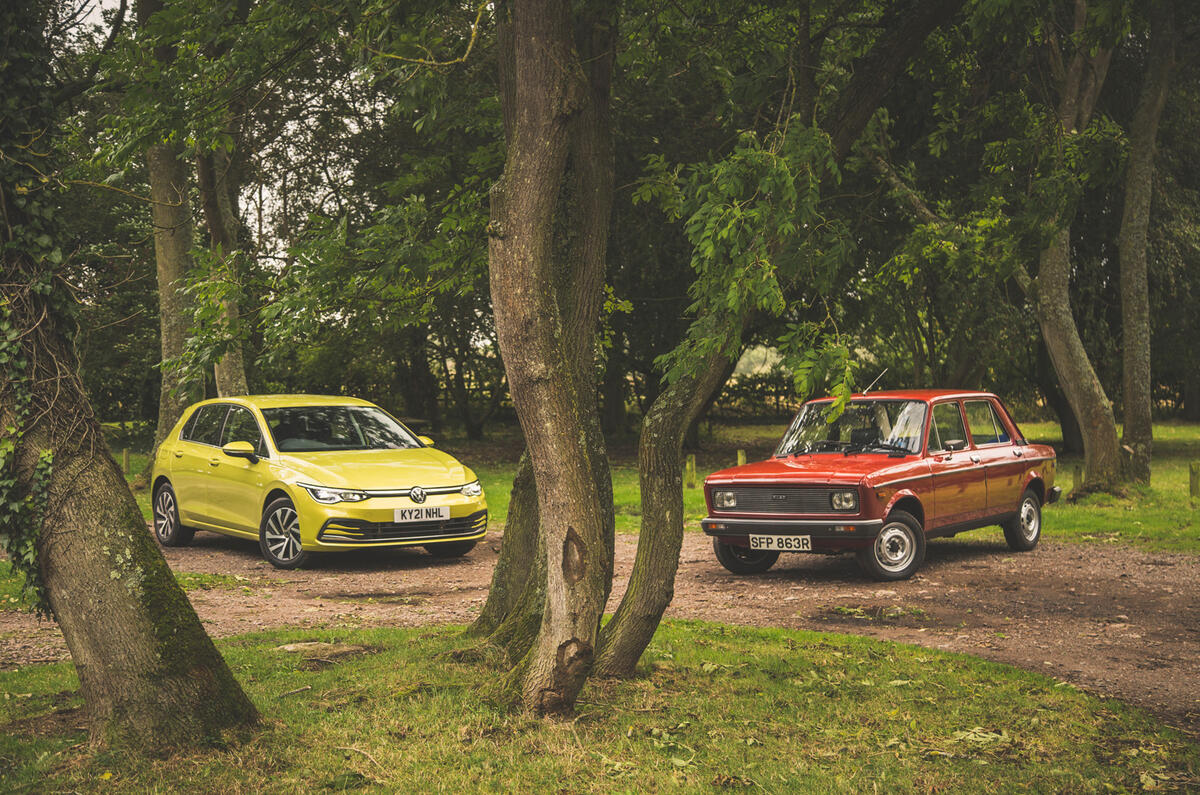
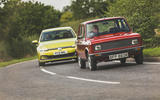

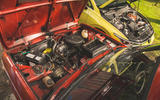





If I asked when you last spotted a Fiat 128 on the road, assuming that you could recall what that car looked like, I’d guess that the answer would have a ‘19’ at the beginning. According to the DVSA, there are just four of them currently registered in the UK, so you would be forgiven if it had been completely wiped from your automotive memory bank.
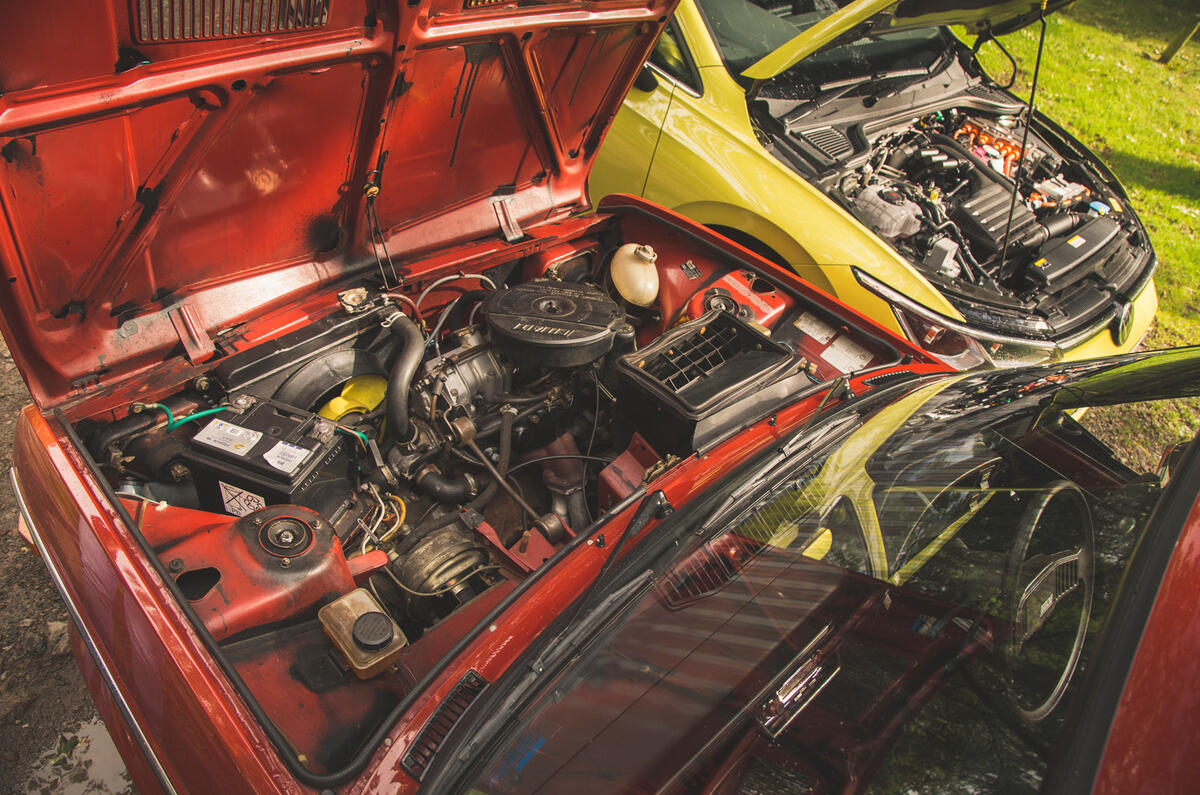
But despite the 128’s virtual obsolescence, beneath the boxy styling of this innocuous-looking car lies the technological template for today’s Fiat 500, Ford Fiesta, Vauxhall Astra and pretty much all other front-drivers from the past 50 years – including the current Volkswagen Golf, which you see dwarfing the 128.
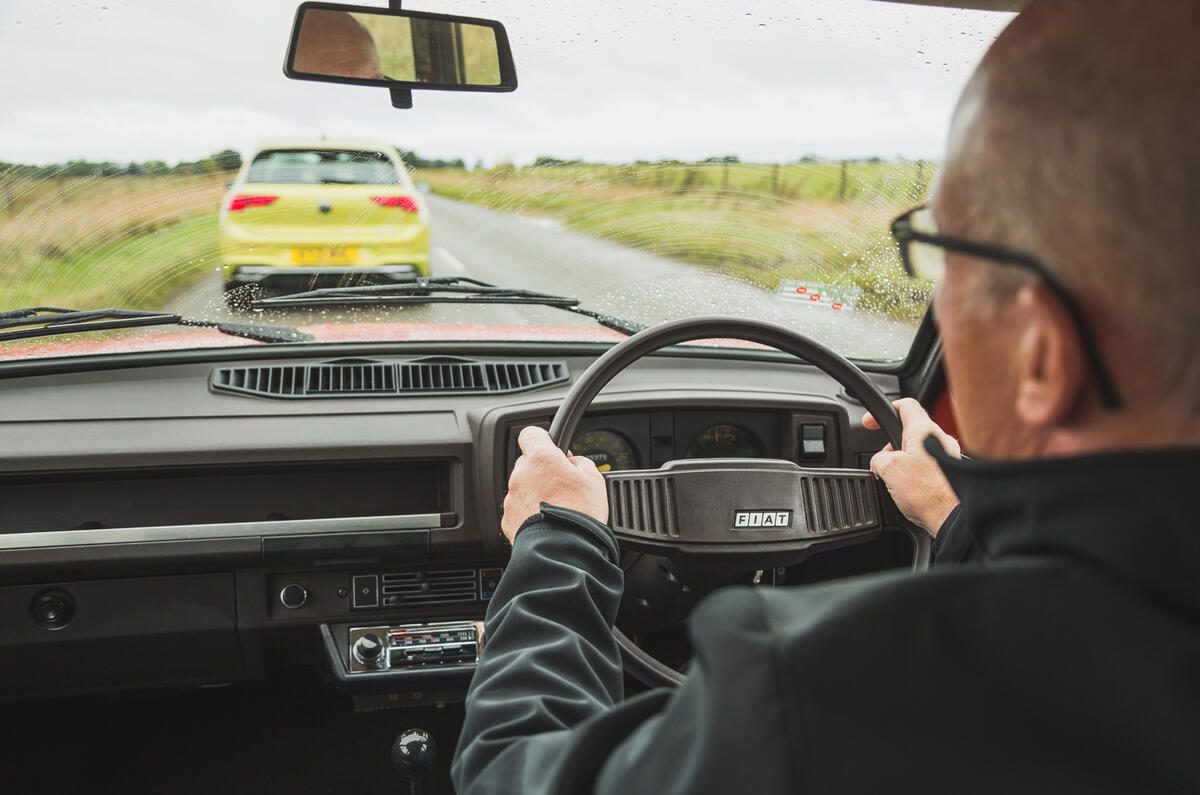
Why have we brought this pair together? To find out if the mechanical lineage that links them can still expose fundamental similarities in the way that each drives. We’ve chosen the Golf specifically because there’s ahistoric connection between the 128 and the original Golf from 1974.

In 1969, when Fiat launched the 128, Volkswagen had decided that its long-in-the-tooth Beetle needed replacing and opted for a FWD platform for its successor. Giorgetto Giugiaro was commissioned to design the body, and on his first visit to Wolfsburg in 1970 (the year in which the 128 won European Car of the Year), he found a completely disassembled 128 in the research department, with every component carefully numbered and labelled.
So why were Volkswagen’s engineers paying so much interest to the prosaically styled Italian car when it didn’t appear to introduce any groundbreaking innovation at launch? The reason was that the 128 was the first mainstream FWD car that successfully brought together all the latest contemporary technology – particularly in its drivetrain and chassis – that not only made it a thoroughly enjoyable car to drive and be a passenger in but also signposted the most costeffective and logical way for a large manufacturer to exploit the growing trend towards FWD machinery.