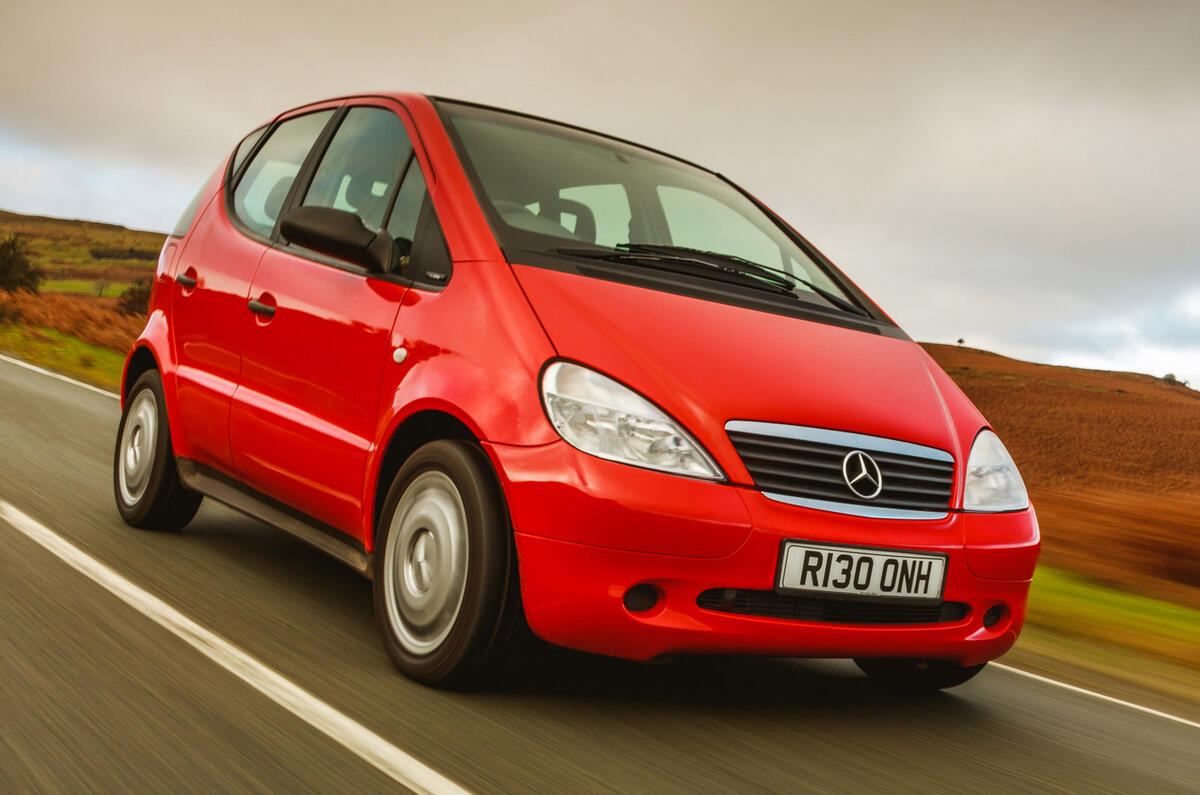
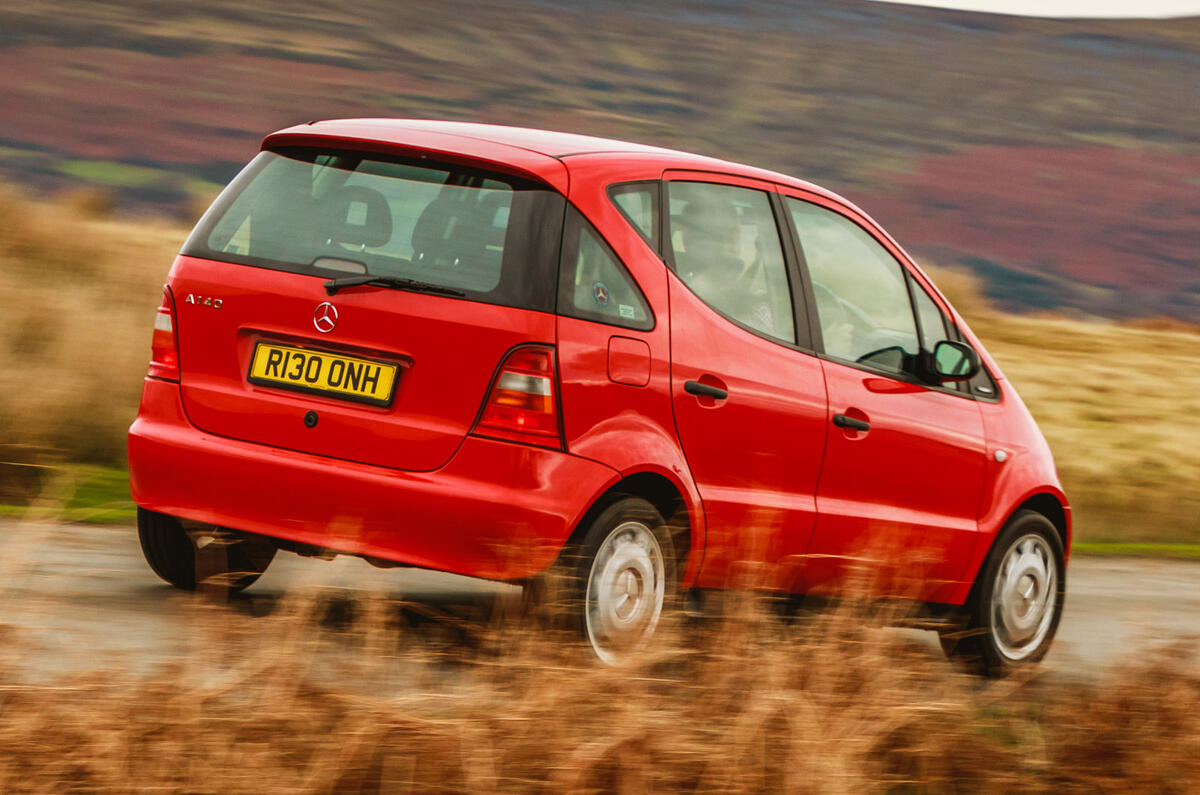
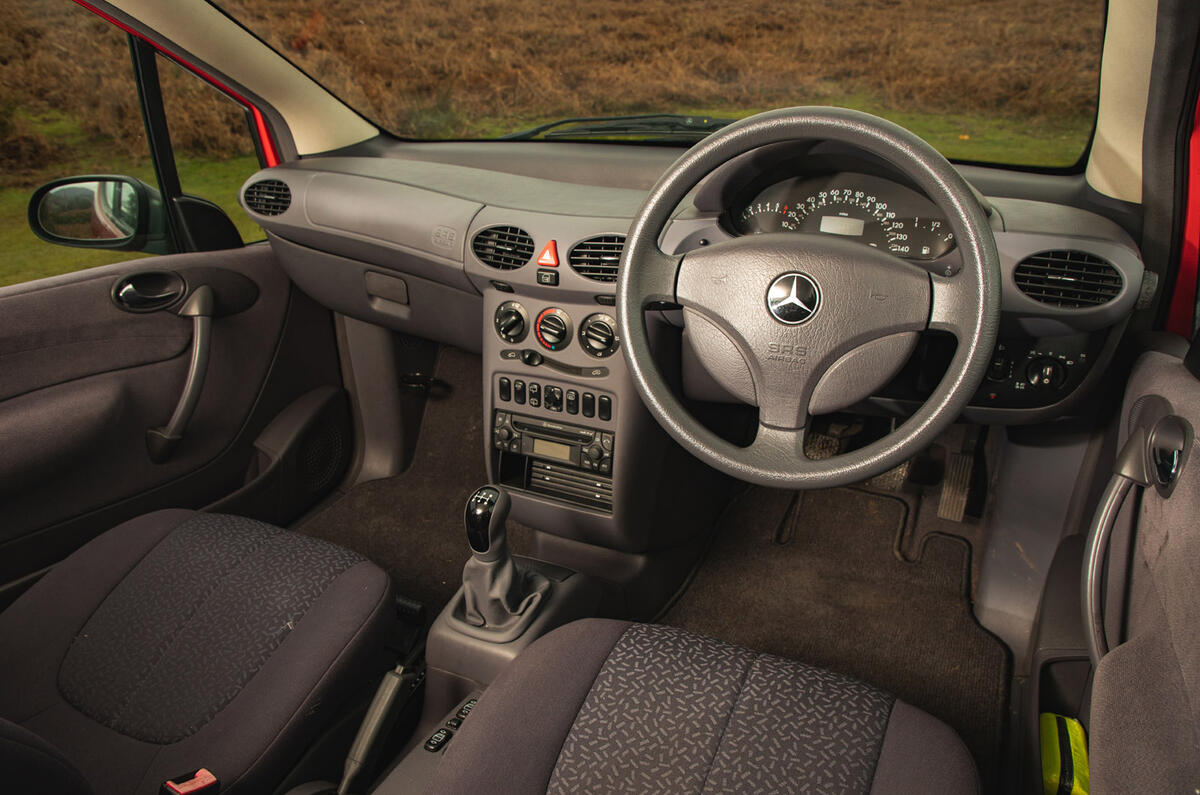
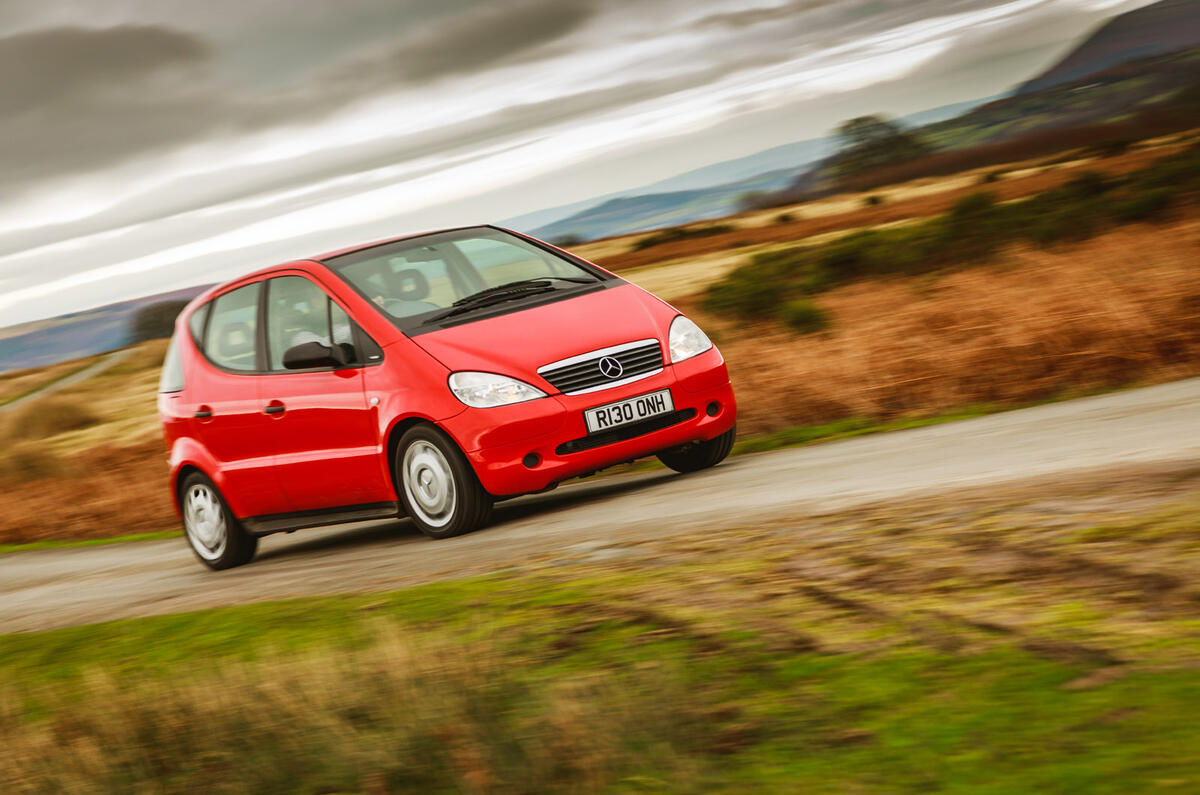
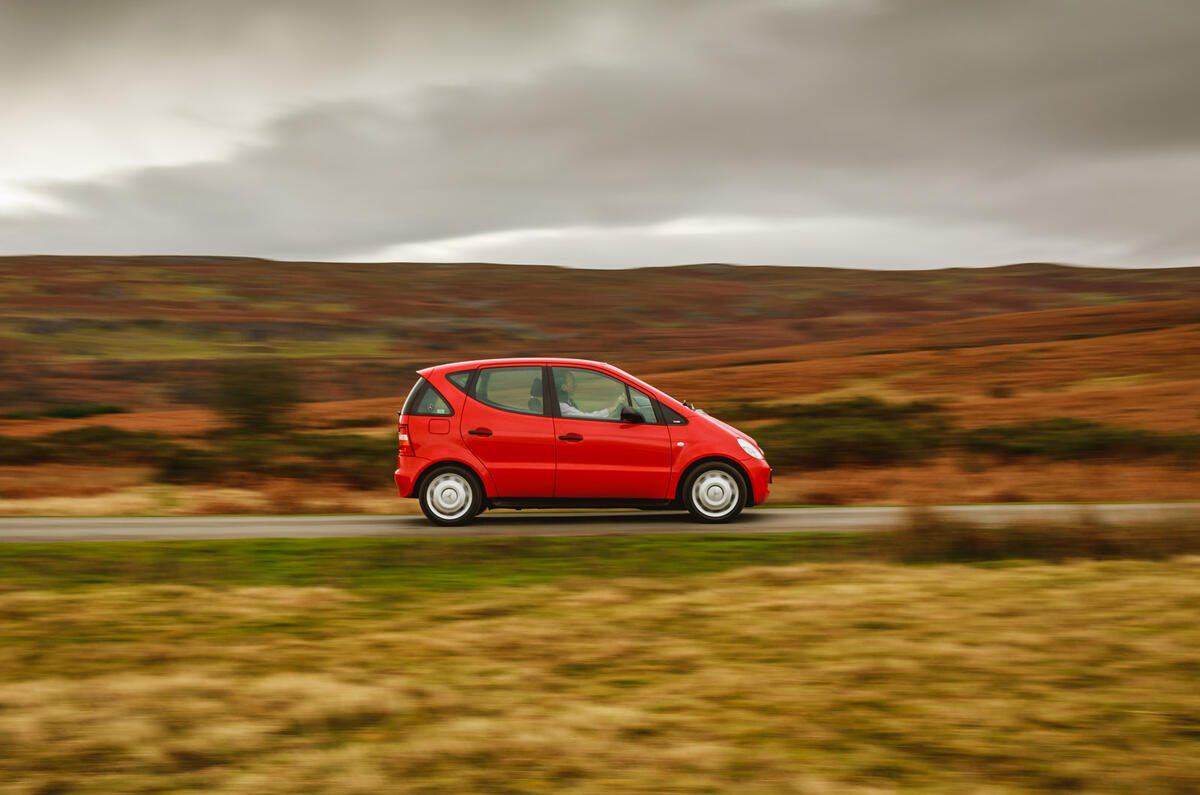
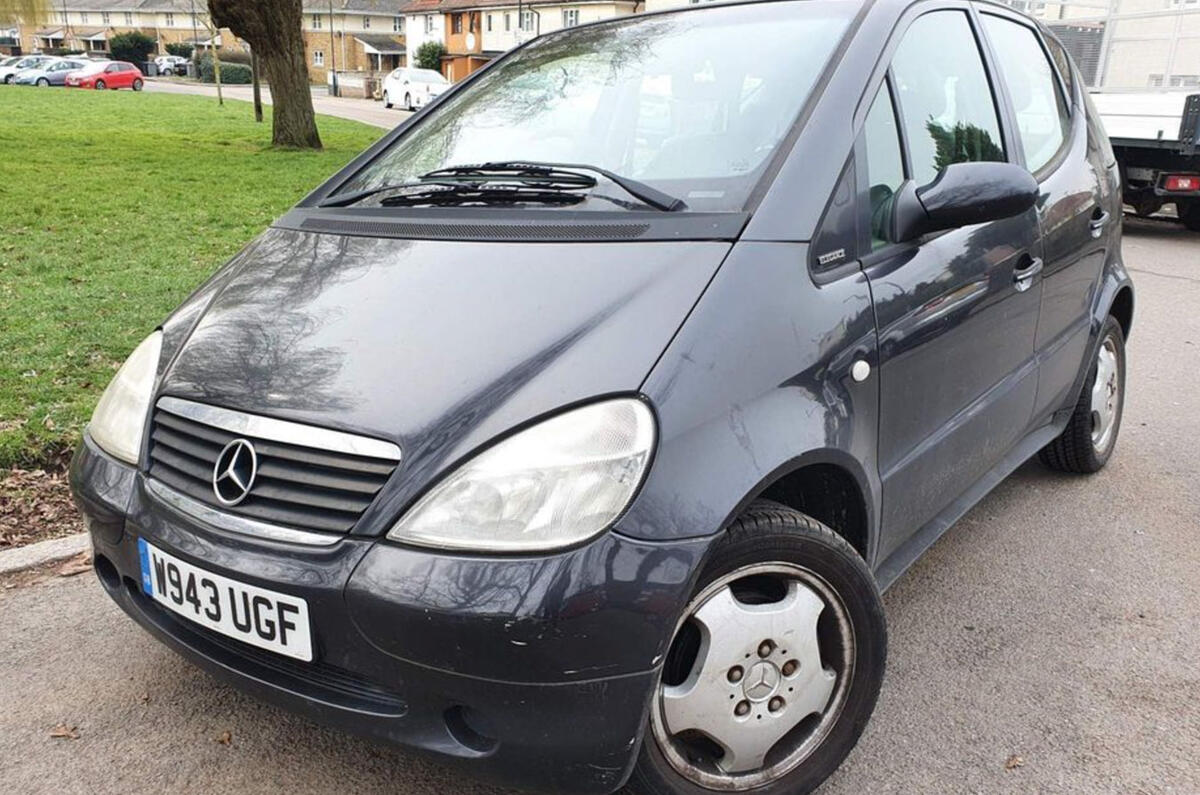
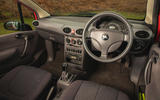
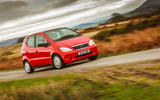
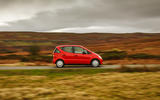

If you weren’t around in 1998, you will find it hard to imagine just how excited the car world was at the arrival of the original A-Class, Mercedes-Benz’s first Volkswagen Golf-sized hatchback.
The year before, there had been the infamous elk test, when early cars had tipped over while swerving, and the expensive rectification work that followed. However, with all that behind us, we looked forward to experiencing the new model and discovering how Mercedes had managed to give its compact car the cabin space of a Mercedes-Benz C-Class saloon.
Not only that, but we also wanted to see how it had shoehorned the engine under the floor to improve occupant safety in a crash and how it felt to sit so high. We also wanted to try our hand at sliding and even removing the car’s individual rear seats as well as its front passenger seat. That’s right: the A-Class could go from miniature luxury car to single-seat van in moments.
Click here to buy your next used car from Autocar
The elk test was a blot on the car’s copybook but at least it meant that for the fix, the A-Class got a truckload of valuable safety kit as standard.
This included electronic stability programme (ESP), traction control, braking assistance and six airbags. Initially, there were three engines: 80bhp 1.4-litre and 100bhp 1.6-litre petrols and an 89bhp 1.7-litre direct-injection diesel. The 1.4 was available with a five-speed gearbox or a clutchless manual, which was replaced in 1999 by an automatic.
Today, petrols outnumber diesels. That suits us, given the scare stories concerning the latter, in particular their glow plugs’ tendency to seize. Automatic models get bad press, too.
A 123bhp 1.9-litre petrol arrived in 1999. It was available with the poshest trim, Elegance, while the remaining engines were offered with Classic and sportier Avantgarde trims. The latter also added a full-length sliding sunroof that hasn’t proven to be the most watertight.