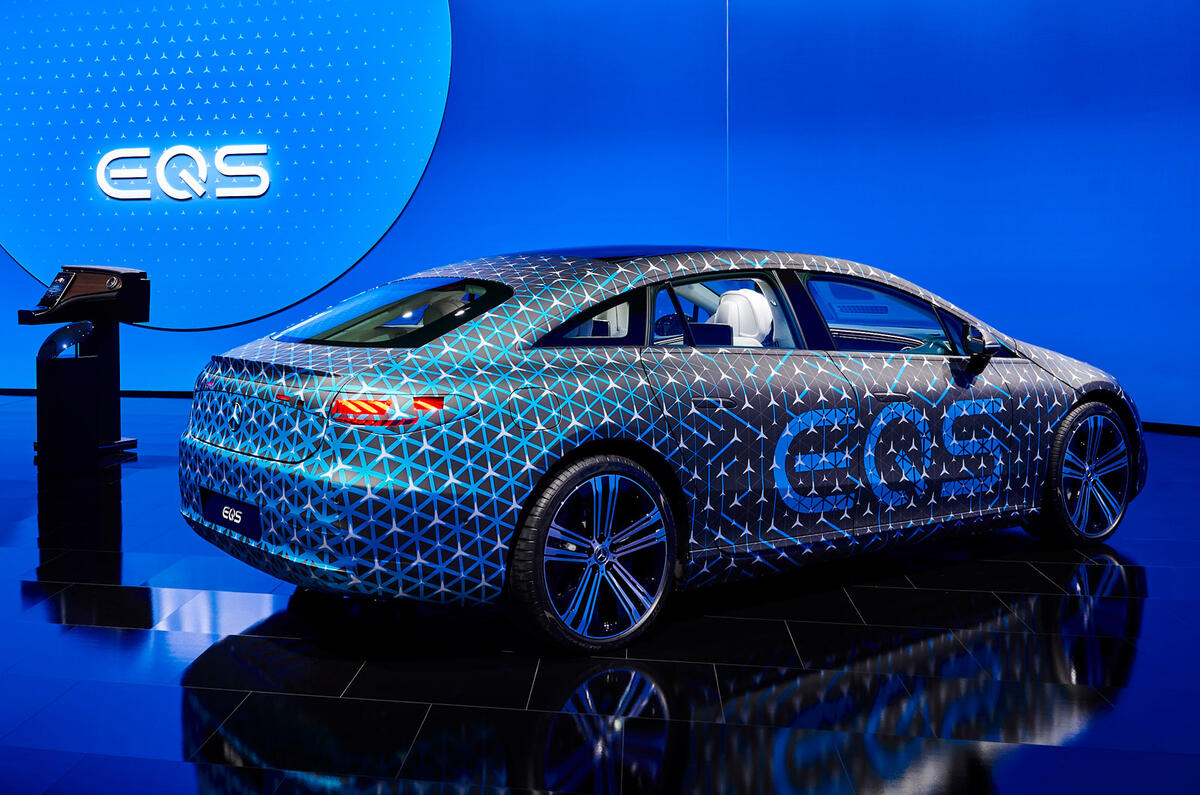
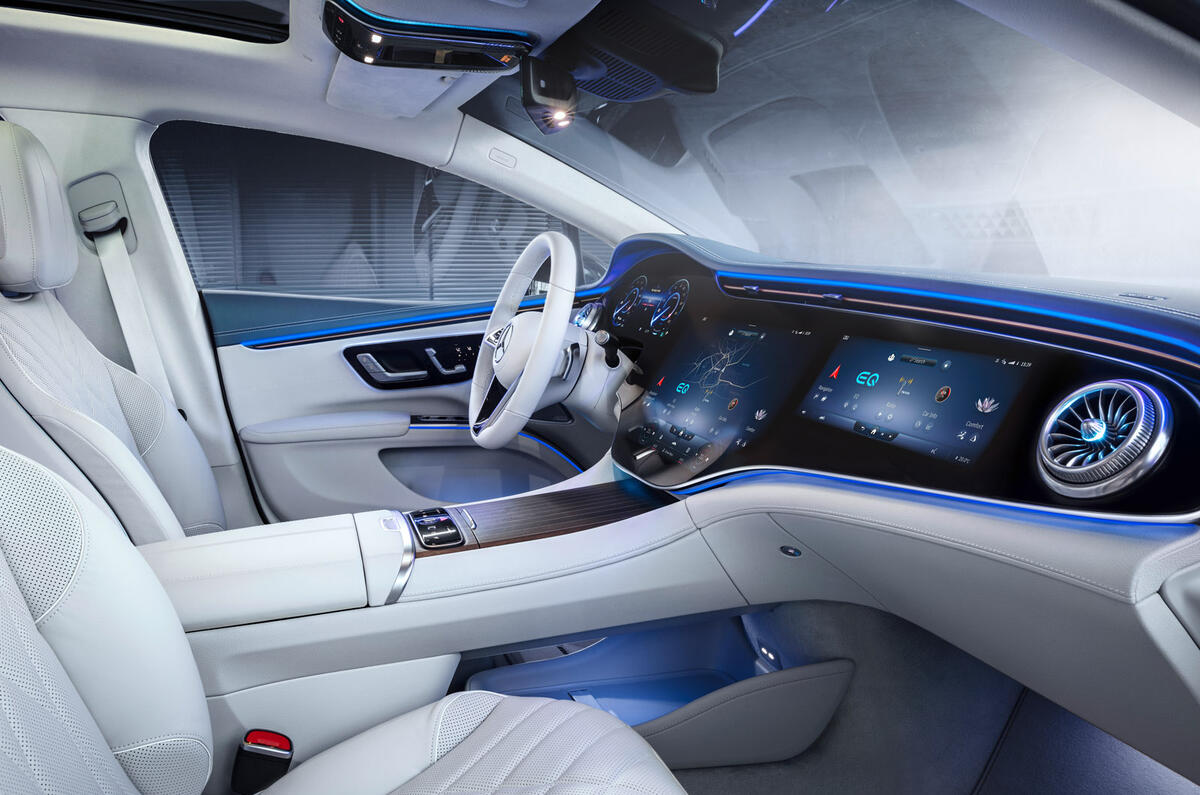
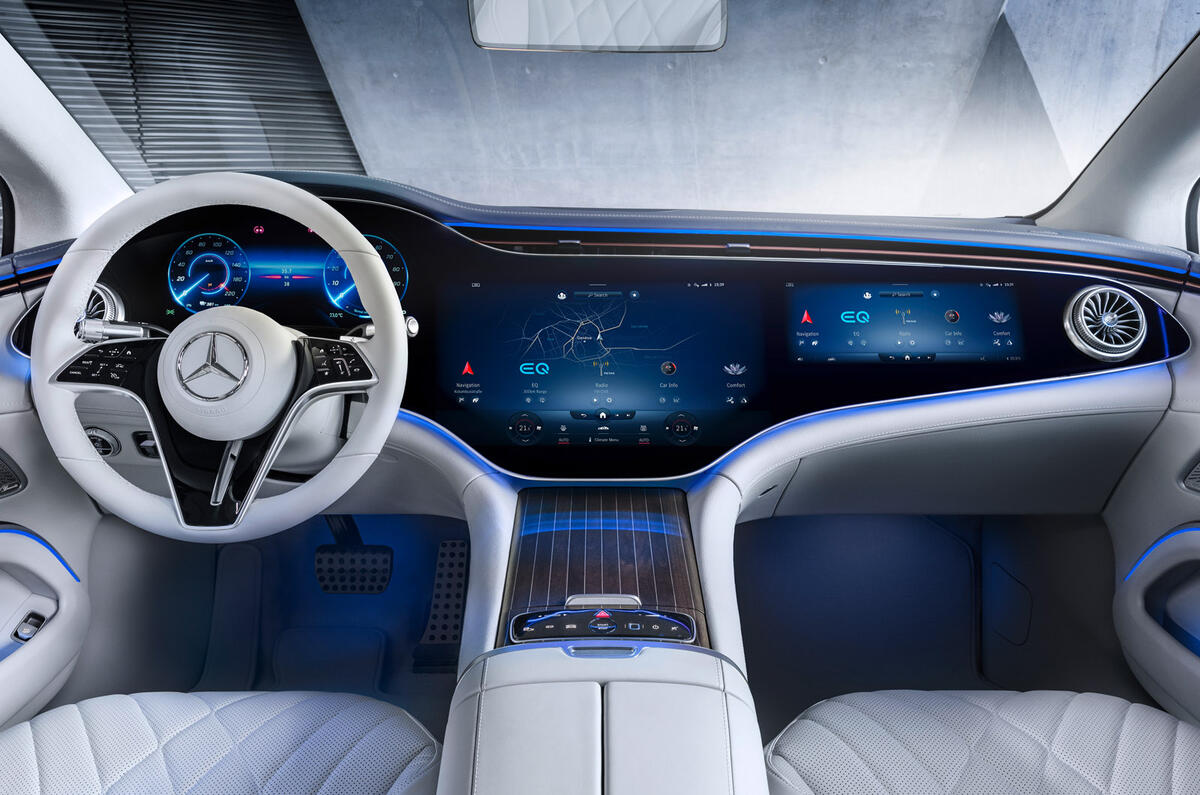

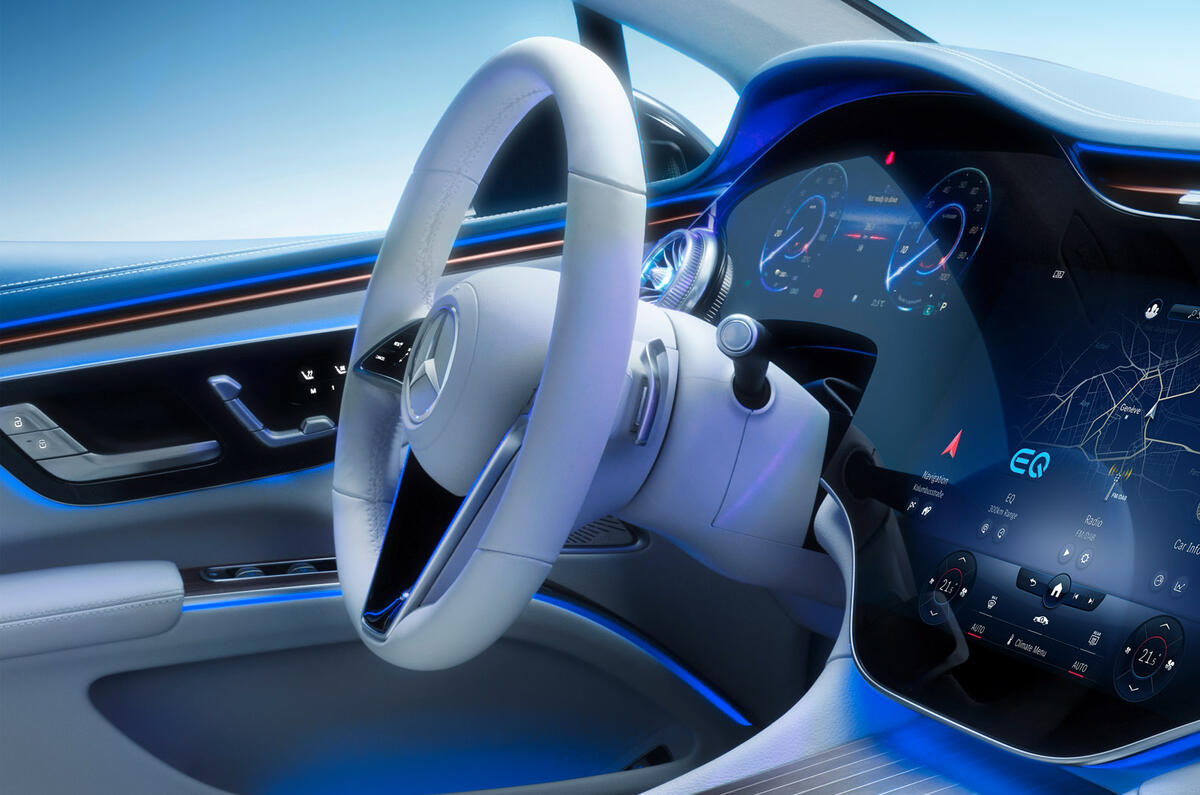















The new Mercedes-Benz EQS will be the world’s most aerodynamically efficient road car yet, according to its maker.
In an announcement ahead of the electric-powered luxury saloon’s planned unveiling on 15 April, Mercedes-Benz said the fourth model from its EQ sub-brand will boast a drag co-efficient “starting at 0.20”.
The benchmark figure, measured in Mercedes-Benz’s state-of-the-art wind tunnel in Sindelfingen, Germany, places the new headlining EQ model ahead of its both its electric-powered and combustion-engine saloon car rivals for outright aerodynamic efficiency.
In January 2021, Telsa claimed a drag co-efficient of 0.208 for the facelifted Model S, bettering the 0.21 of the Lucid Air.
It also establishes the EQS as the most aerodynamically efficient Mercedes-Benz road car yet ahead of the A-Class saloon and seventh-generation S-Class, both rated at 0.22.
The 0.20 figure was achieved in combination with 19in AMG wheels and with the Sport driving mode, says Mercedes-Benz.
The EQS is the first model to be based on Mercedes-Benz’s EVA platform, which is also planned to underpin the upcoming EQE saloon, EQE SUV and EQS SUV, among other upcoming models.

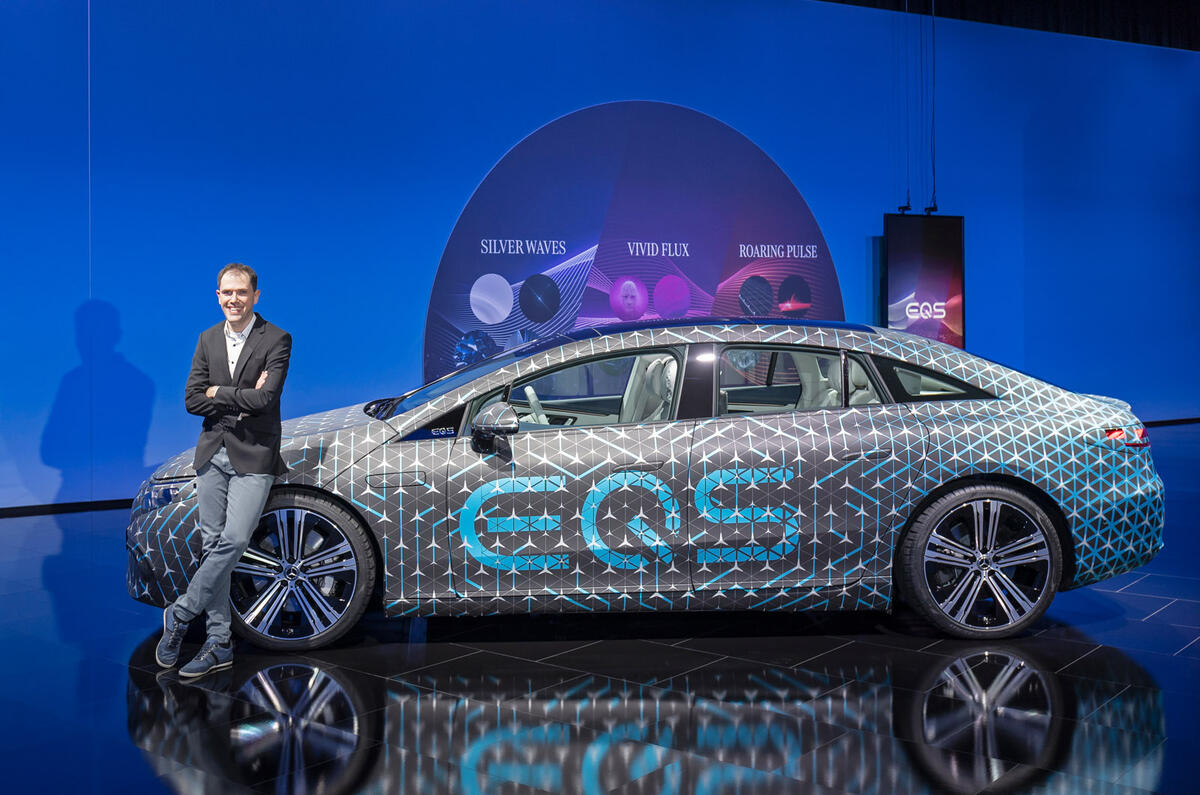
The new platform uses a skateboard-style architecture that has allowed Mercedes-Benz to provide the upmarket saloon with its own distinctive cab-forward proportions, with the A-pillars set well forward, a shorter bonnet and boot than the latest S-Class and a heavily curved roofline – the so-called 'one bow' design lineage as Mercedes-Benz describes it – to give it a coupé-like profile with short overhangs.
The new Mercedes-Benz model adopts a smooth-surfaced design devoid of body creases. A key element used to achieve the record-breaking aerodynamic figure is an uncharacteristically low front end featuring a fully enclosed black panel grille, as previewed on the EQS concept car revealed in 2019.