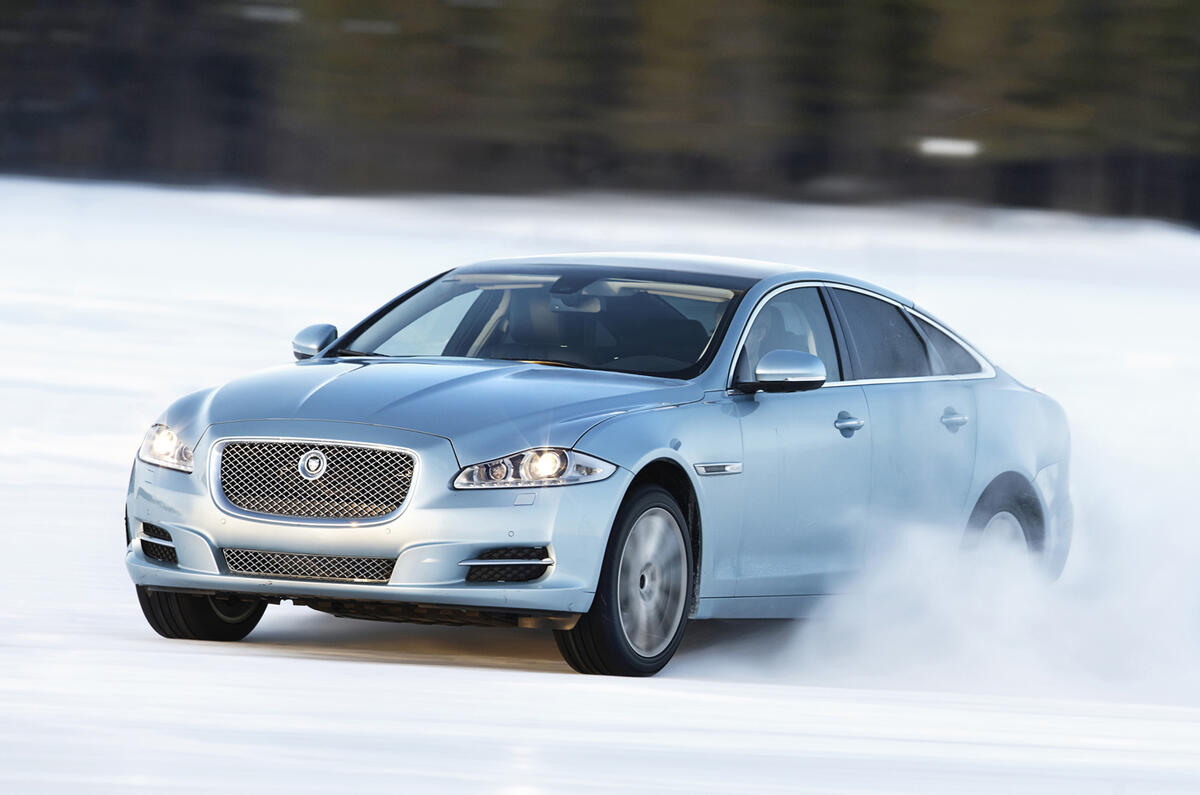

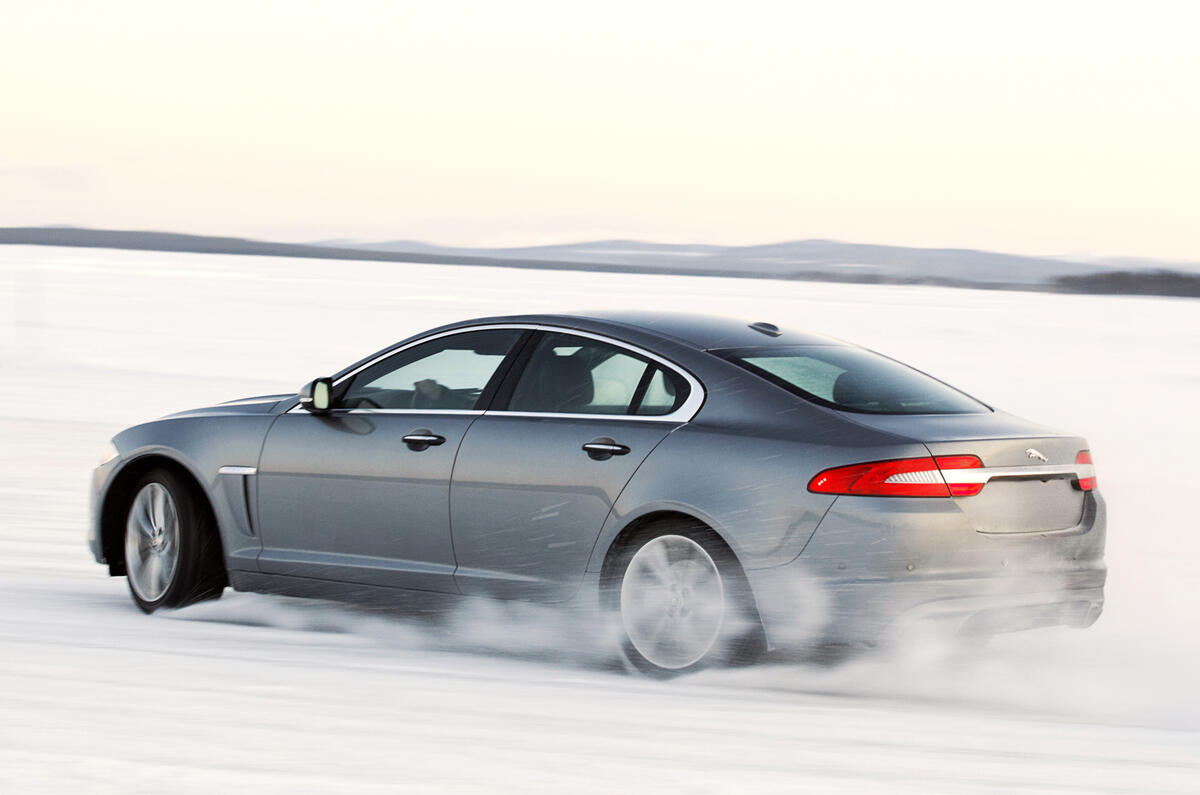






Jaguar has revealed its all-wheel drive versions of the Jaguar XJ and XF at the Moscow motor show. The new powertrains have been developed using expertise from sister company Land Rover.
The all-wheel drive powertrain will be mated exclusively with Jaguar’s new 335bhp 3.0-litre V6 supercharged petrol engine and an eight-speed ZF gearbox.
Jaguar cites its key markets as the North American ‘snow belt’, Russia and China. There are currently no plans to introduce it to the UK market, unless exceptional demands warrants it.
Adrian Hallmark, global brand director said: “Jaguar has revitalised its core range, and is now undertaking an extensive programme of introducing new models, strategic powertrain and technologies to reinvigorate the Jaguar brand around the world.”
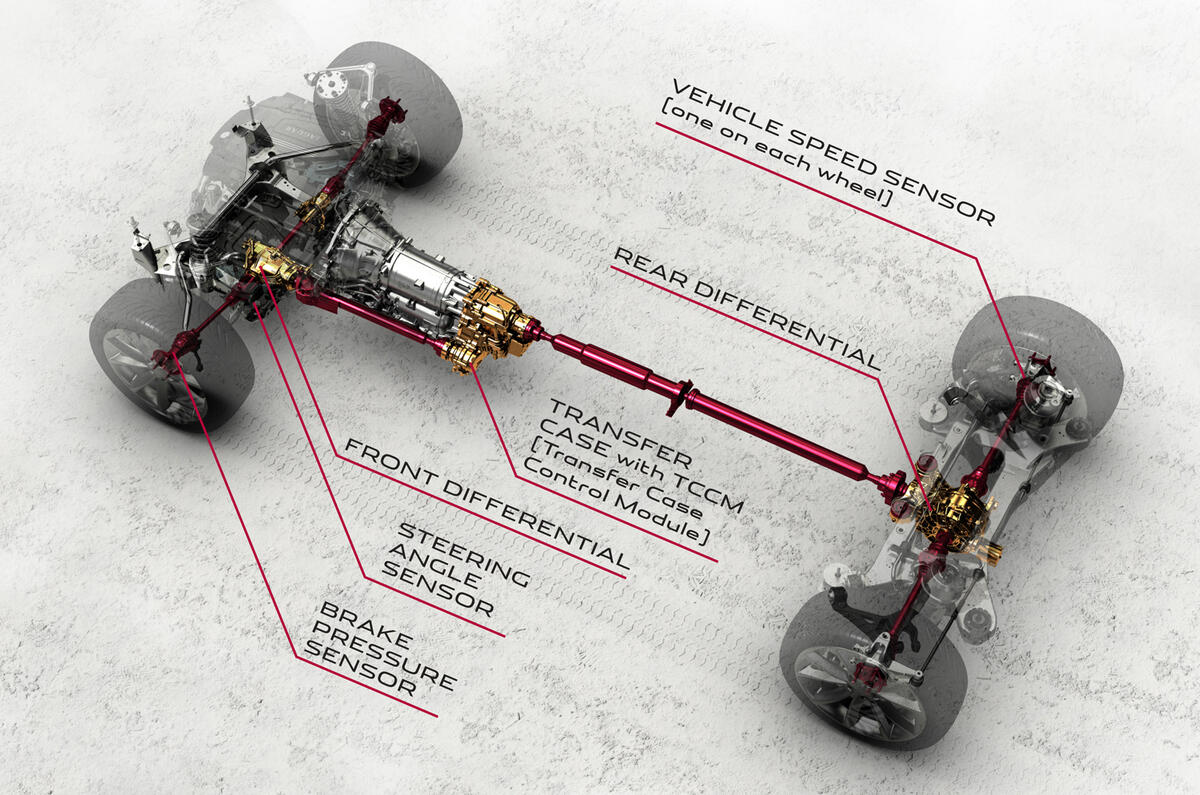
The AWD system operates intelligently, directing torque through a multiplate wet clutch operated by a transfer case control module, to direct torque to the front and rear as required. A new cross member, engine mounts and exhaust system have been engineered in both the Jaguar XF and XJ.
The front driveshafts run through the sump to lower the centre of gravity in order, and the suspension and steering systems of both cars have been modified to deliver what Jaguar says is the “same involving handling as their rear-drive counterparts”. In dry conditions, the all-wheel drive system operates a rear bias except during step off when torque is pre-loaded to the front for a smoother start. Maximum torque split is 50:50 front:rear.
The AWD system works with Jaguar Drive Control, allowing the driver to select Winter mode which alerts the system to a likely reduction in traction, allowing it to apportion more torque to the front wheels.
Jaguar’s new 3.0-litre V6 supercharged petrol engine, introduced as part of 2013 model year revisions, delivers 335bhp and 332lb ft between 3500-5000rpm with 295lb ft available from 2000rpm. It features dual independent variable valve timing and a new sparkplug positioning which aligns the electrode more accurately for enhanced combustion and efficiency.
A twin-vortex Rootes supercharger is mounted within the ‘Vee’ of the engine and incorporates electronically-managed boost control. Jaguar claims this improves efficiency by up to 20 per cent.