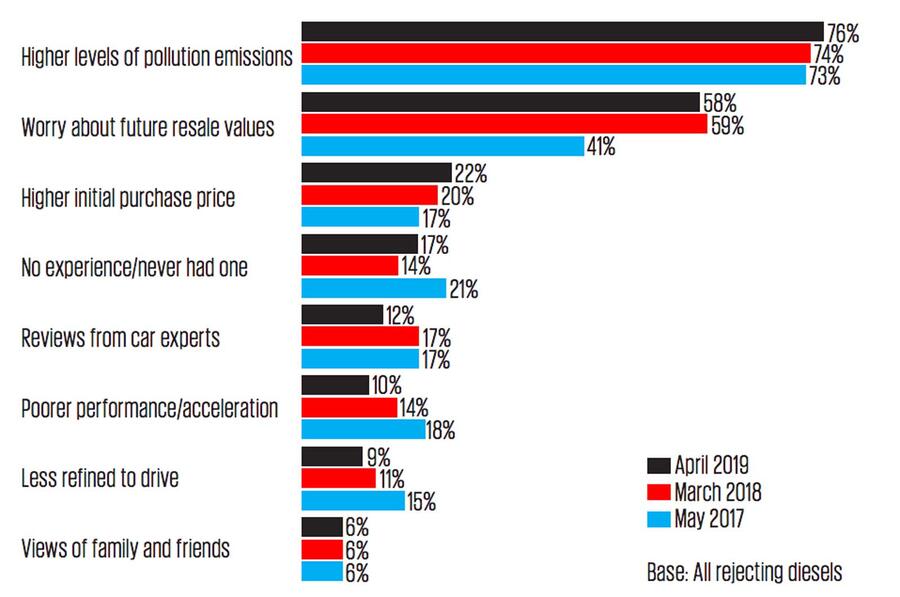

It’s hard to believe that just two years ago, almost half of the new cars sold in the UK were diesel.
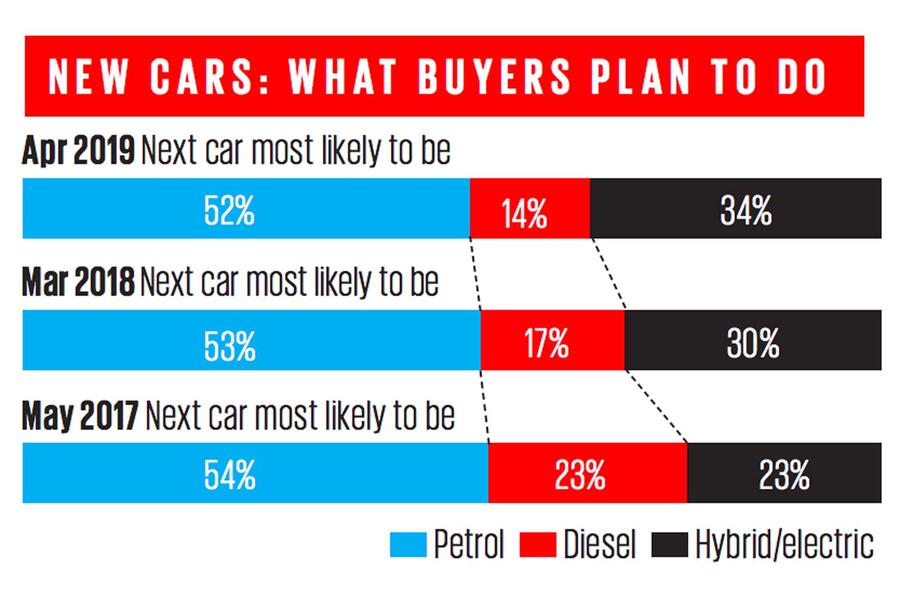
In May 2017, in the first of a series of powertrain studies done for Autocar, market research firm Simpson Carpenter forecast that within three years diesel sales would fall to 23% of the total new car market – a prediction that was met with some scepticism at the time.
But now, two years on, diesel sales in the first quarter of 2019 have fallen to just 27% of the new car market. So far, the main beneficiary has been petrol. While buyers expressed an intent to buy hybrid or electric, the relative shortage of available models has limited alternatively fuelled vehicles to just 6% of new car sales.
Simpson Carpenter’s most recent research for Autocar suggests the move away from diesel will continue, with just 18% of car buyers – new and used – now expecting their next car to be diesel.
The main shift from diesel is in the new car market, where the proportion of people intending to buy diesel next time is down from 23% in 2017 to just 14%. During the same period, the number of new car buyers expecting to buy a hybrid or electric car has risen from fewer than one in four to more than one in three – growth likely to continue as the choice of models increases.
Even in the used car market, diesel’s popularity continues to wane. Only 21% now intend to buy a diesel next time – just 2% more than those who say they’ll opt for a hybrid or electric car. The very small number of used hybrids and electric cars on the market means a big imbalance between supply and demand for different powertrains.
However, petrol car sales are likely to remain healthy for some time. Although one in five of those with petrol-engined cars say they will defect to hybrid or electric next time round, these losses will be largely mitigated by almost one in three diesel owners who plan to switch to petrol.