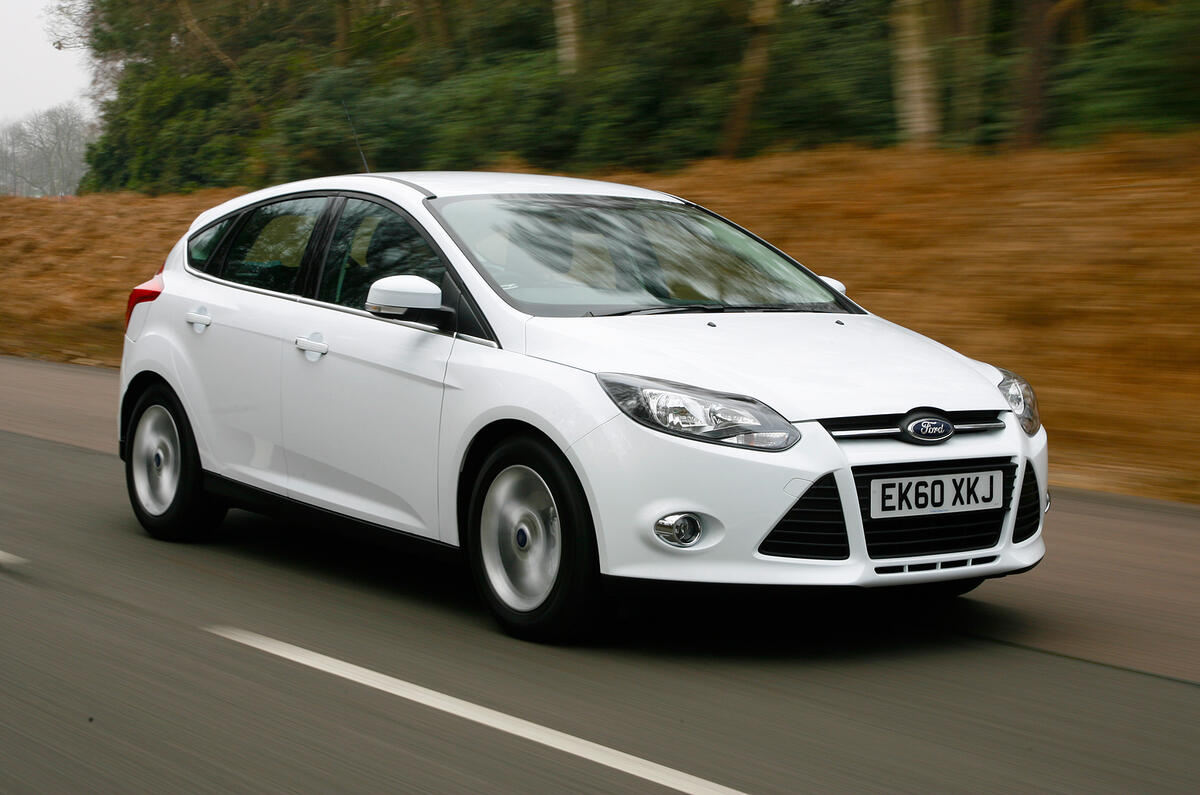

Ford Focus-sized family hatchbacks returning 97.5mpg will be commonplace within three years, predicts Bosch board member Peter Tyroller – fuel economy 40 per cent better than today’s cars.
This will be achieved through a combination of powertrain improvements and other measures such as low rolling resistance tyres and engine stop-start – but unlike today, such ‘other measures’ will be a far smaller part of the improvements.
Petrol will not be left behind either: Tyroller, speaking at the SMMT International Automotive Summit at Canary Wharf, predicts a family-sized car averaging 64.2mpg on the official cycle will become common.
Next generation powertrains, such as Ford’s 1.0-litre three-cylinder Ecoboost engine (which has replaced the older 1.6-litre four-cylinder and now accounts for one in four UK Focus sales), will reduce fuel consumption by 30 per cent compared to today’s engines. Add-on measures will reduce it by a further 10 per cent, predicts Tyroller.
Up to now, it is the widespread adoption of technology such as stop-start and longer gear ratios to existing powertrains that have led fuel economy improvements. Many argue these are more effective for reducing official fuel consumption figures than actual real-world economy.
Manufacturers are making such investment in internal combustion engines because the technology will remain by far the biggest powertrain solution. Even by 2020, Tyroller predicts electrified vehicles – including plug-in hybrids as well as pure electric cars – will only account for 10 per cent of the European new car market.
Diesel in particular is vital to European legislation of achieving a 95g/km corporate fleet average CO2 figure by 2020. “Diesel is key in Europe: OEMs will achieve the 95g/km target with a small share of EV sales.” Only after 2020 will EVs start to become more important.
When asked about sales splits beyond 2025, Tyroller replied: “who knows?”
The importance of EVs in achieving CO2 targets has already declined from expectations a few years ago, added Tyroller. “Two years ago, people said our 10 per cent target was too conservative. Now, they agree” – largely because of the Europe-wide recession that has tipped the cost benefit back towards internal combustion engines.
Richard Aucock