
The negative effects of Brexit are already being felt and emphasise the need for faster-paced government negotiations, Society of Motor Manufacturers president Tony Walker has said.
During his speech at the 101st annual SMMT dinner, Walker said Britain’s car industry requires hard answers and certainty from the government, in order to prevent trends of falling consumer confidence and slowing car sales from reaching a critical point.
“We [the industry] will never stop striving to be competitive,” he said, “but we ask government to help provide the conditions in which we can compete. Like every industry, we need certainty now.”
Brexit has been directly linked to falling domestic demand for new cars, which decreased by 2.9% in October alone and has seen predictions for the nation’s car production output fall by 700,000 units for 2017 to 1.73 million. Exports of British-built cars, by comparison, grew by 5% last month, ensuring that the nation’s overall output actually grew by 3.5% across the four months.
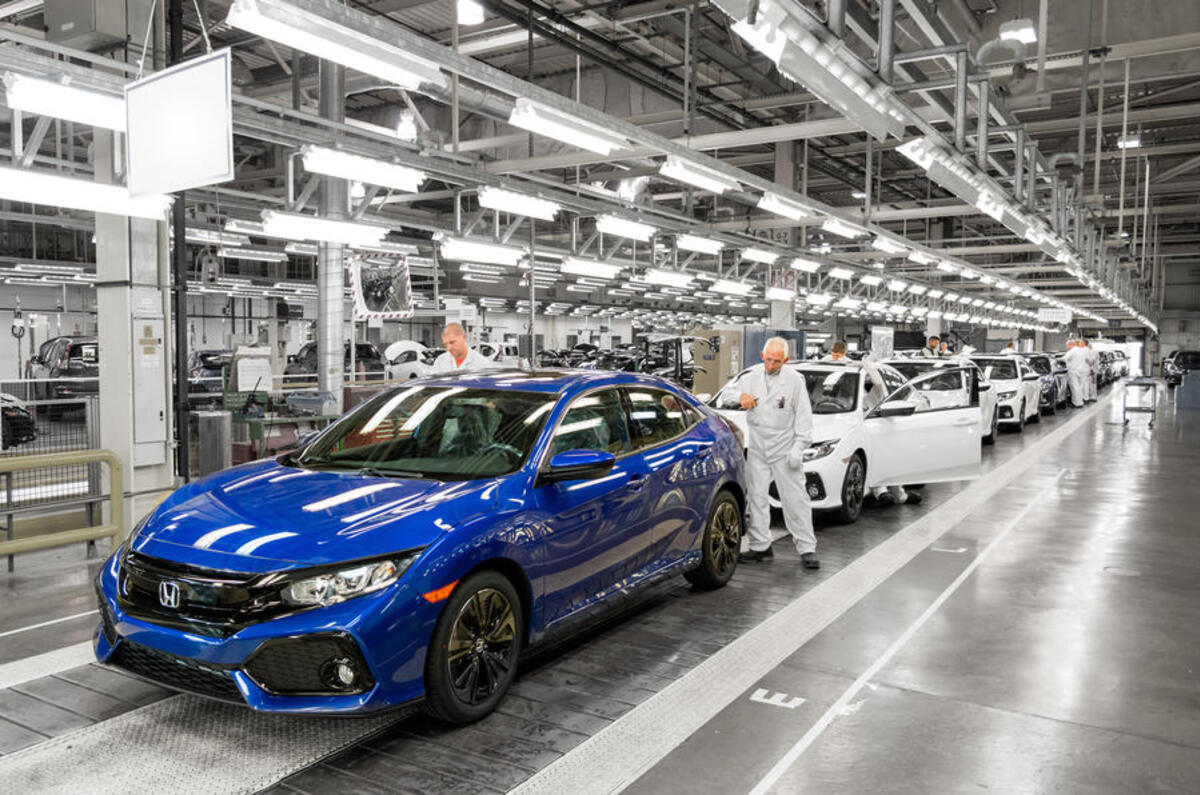
Walker revealed that 1100 lorries supply parts from Europe to the car industry per day, with the majority arriving without any customs checks. HM Revenue and Customs figures show that these contribute £35 million worth of components to car plants a day, with almost 80% of the cars they help to make being exported – most to Europe.
These close ties with Europe for supply and export, Walker explained, emphasise the importance of securing a tariff-free deal with the continent. If no deal is made, Britain’s departure from the European Union on 29 March 2019 could leave the industry faced with at least £4.5 billion of World Trade Organisation tariffs per year.
“We have delivered an export-led renaissance,” said Walker. “But we are not complacent. A hard Brexit would undermine all that we have collectively achieved. It is a real threat – a hurdle we cannot ignore.”
Alongside his calls for quicker negotiations, Walker also asked the government to understand the importance for continued development of combustion engines in order to up the rate of progress in green technology. In response to the UK’s recent announcement of a ban on pure petrol and diesel cars from 2040, he said “the internal combustion engine is not dead – it is the path to a cleaner and greener future.
“Banning diesel and petrol cars might be a sound bite that works but it’s not a policy that works. If you ban them you disrupt the new car market and you hamper investment in the electric, emission-free vehicles of tomorrow. You set the future back.”